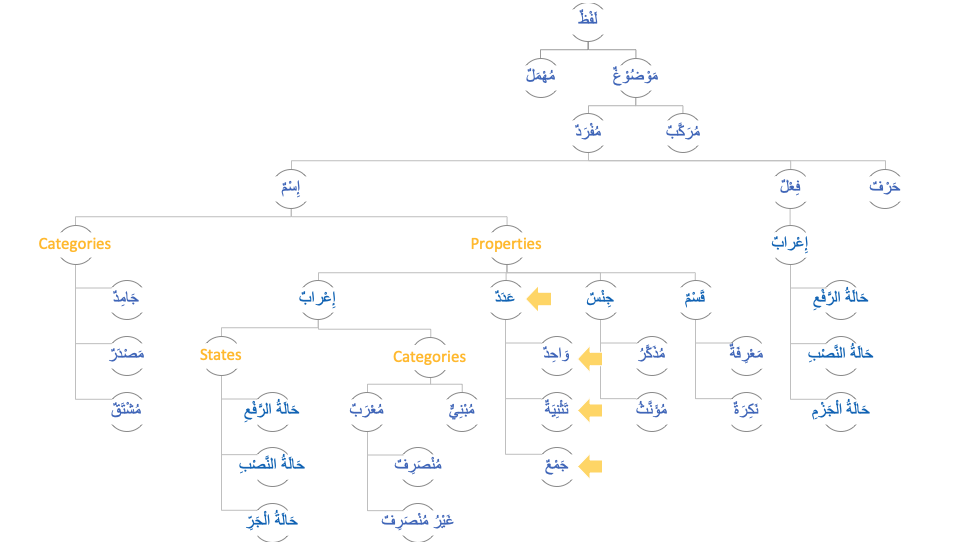
عَدَدٌ

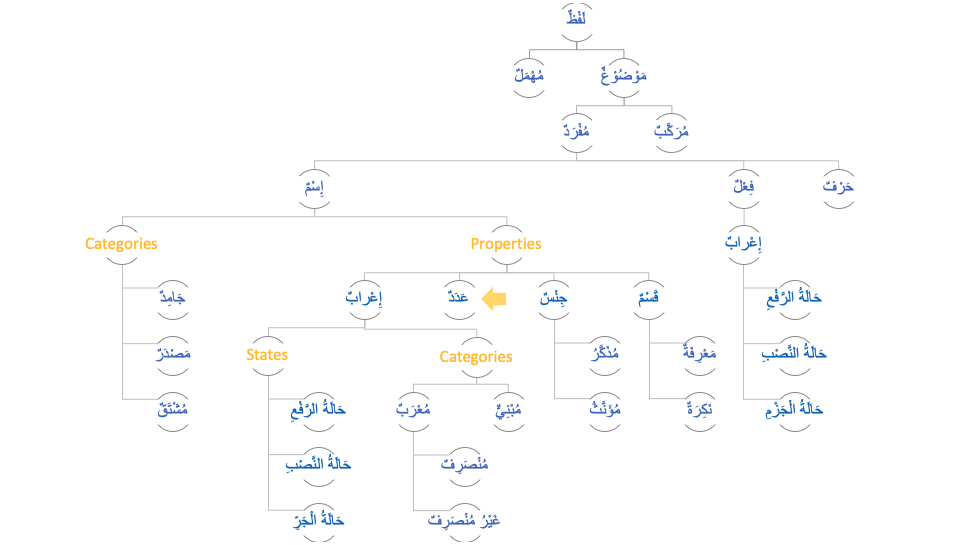
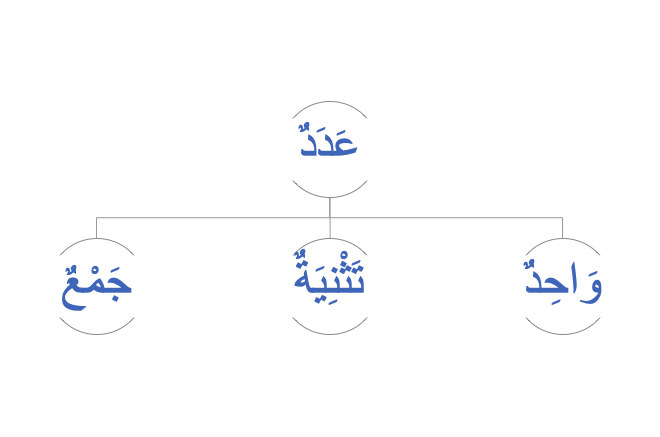
There are three categories of numbers (عَدَدٌ).
- وَاحِدٌ (Singular)
- تَثْنِيَةٌ (Dual)
- جَمْعٌ (Plural)
وَاحِدٌ
وَاحِدٌ denotes a singular إِسْمٌ. For example using the word مُسْلِم:
| وَاحِدٌ (Singular) | مُذَكَّرُ (Masculine) |
|---|---|
| مُسْلِمٌ a muslim | رَفْعٌ |
| مُسْلِماً a muslim | نَصْبٌ |
| مُسْلِمٍ a muslim | جَرٌّ |
| وَاحِدٌ (Singular) | مُؤَنَّثُ (Feminine) |
|---|---|
| مُسْلِمَةٌ a muslim | رَفْعٌ |
| مُسْلِمَةً a muslim | نَصْبٌ |
| مُسْلِمَةٍ a muslim | جَرٌّ |
تَثْنِيَةٌ
تَثْنِيَةٌ denotes a dual (two) إِسْمٌ. We do not have ‘Dual’ in English. In Arabic it is formed by placing at the end of a singular (وَاحِدٌ) إِسْمٌ, one of the following:
a) For رَفْعٌ : An Alif ( ا) preceded by فَتْحَةٌ (ـَ) and followed by a nun (ن) with a كَسْرَةٌ (ـِ).
i.e. ـَ انِ .
b) For نَصْبٌ and جَرٌّ : a Ya (ي) preceded by فَتْحَةٌ (ـَ) and followed by a nun (ن) with a كَسْرَةٌ (ـِ).
i.e. ـَ ينِ .
Continuing our مُسْلِم table:
| تَثْنِيَةٌ (Dual) | وَاحِدٌ (Singular) | مُذَكَّرُ (Masculine) |
|---|---|---|
| مُسْلِمَانِ Two muslims | مُسْلِمٌ a muslim | رَفْعٌ |
| مُسْلِمَيْنَ Two muslims | مُسْلِماً a muslim | نَصْبٌ |
| مُسْلِمَيْنَ Two muslims | مُسْلِمٍ a muslim | جَرٌّ |
| تَثْنِيَةٌ (Dual) | وَاحِدٌ (Singular) | مُؤَنَّثُ (Feminine) |
|---|---|---|
| مُسْلِمَتَانِ Two muslims | مُسْلِمةٌ a muslim | رَفْعٌ |
| مُسْلِمَتَيْنِ Two muslims | مُسْلِمَةً a muslim | نَصْبٌ |
| مُسْلِمَتَيْنِ Two muslims | مُسْلِمَةٍ a muslim | جَرٌّ |
جَمْعٌ
جَمْعٌ denotes a plural (more than two) إِسْمٌ.
For Masculine (مُذَكَّرُ) It is formed by placing at the end of a singular (وَاحِدٌ) إِسْمٌ, one of the following:
a) For رَفْعٌ : A waw (و) preceded by ضَمَّةٌ (ـُ) and followed by a nun (ن) with a فَتْحَةٌ (ـَ).
i.e. ـُ ونَ
b) For نَصْبٌ and جَرٌّ : a Ya (ي) preceded by كَسْرَةٌ (ـِ) and followed by a nun (ن) with a فَتْحَةٌ (ـَ).
i.e. ـِ ينَ .
Continuing our مُسْلِم table:
| جَمْعٌ (Plural) | تَثْنِيَةٌ (Dual) | وَاحِدٌ (Singular) | مُذَكَّرُ (Masculine) |
|---|---|---|---|
| مُسْلِمُوْنَ Muslims | مُسْلِمانِ Two muslims | مُسْلِمٌ a muslim | رَفْعٌ |
| مُسْلِمِيْنَ Muslims | مُسْلِمَيْنَ Two muslims | مُسْلِماً a muslim | نَصْبٌ |
| مُسْلِمِيْنَ Muslims | مُسْلِمَيْنَ Two muslims | مُسْلِمٍ a muslim | جَرٌّ |
For Feminine (مُؤَنَّثُ) It is formed by discarding the ة and adding at the end of a singular (وَاحِدٌ) إِسْمٌ, one of the following:
a) For رَفْعٌ : An Alif ( ا) precede by فَتْحَةٌ (ـَ) and followed by a Ta (ت) with رَفْعٌ sign.
i.e. ـَ اتٌ .
b) For نَصْبٌ and جَرٌّ : An Alif ( ا) precede by فَتْحَةٌ (ـَ) and followed by a Ta (ت) with جَرٌّ sign.
i.e. ـَ اتٍ .
Continuing our مُسْلِم table:
| جَمْعٌ (Plural) | تَثْنِيَةٌ (Dual) | وَاحِدٌ (Singular) | مُؤَنَّثُ (Feminine) |
|---|---|---|---|
| مُسْلِمَاتٌ Muslims | مُسْلِمَتانِ Two muslims | مُسْلِمةٌ a muslim | رَفْعٌ |
| مُسْلِمَاتٍ Muslims | مُسْلِمَتَيْنِ Two muslims | مُسْلِمَةً a muslim | نَصْبٌ |
| مُسْلِمَاتٍ Muslims | مُسْلِمَتَيْنِ Two muslims | مُسْلِمَةٍ a muslim | جَرٌّ |

Memorise the مُسْلِم table and use it as a template.
In Arabic the normal plural endings are detailed in our مُسْلِم table above. These are termed as الجَمععُ السَالِمُ (Sound Plurals). The pattern detailed in the مُسْلِم table can be used as a template for all الجَمععُ السَالِمُ (Sound Plurals).
However, there are other types of Plurals:
1. الجَمععُ السَالِمُ (Sound Plurals). As detailed in the مُسْلِم table above.
2. الجَمععُ المُكَسَّرُ (Broken Plurals)
Theالجَمععُ المُكَسَّرُ ( Broken Plural) does not follow the normal plural ending as the Muslim table.
In English the normal plural ending (Sound Plurals) is with the use of the letter ‘s’ as in books, pens etc. However, there are some plural words in English that do not follow the normal plural ending e.g. teeth not tooths, geese not gooses, mice not mouses, children not childs, etc. These are considered broken plurals. The same is true in Arabic e.g. The plural word for عَالِمٌ (Scholar) is عُلَمَاءُ. عُلَمَاءُ (Scholars) does not follow the normal plural pattern in the مُسْلِم table. The easiest way to recognise these is through vocabulary build.

Theالجَمععُ المُكَسَّرُ ( Broken Plural) that are Human in meaning e.g. رُسُلٌ (Messengers), نِسَاءٌ (Women) are grammatically treated as ‘she’ i.e. third person Feminine.
We will deal with what it means to be treated ‘grammatically’ in later lessons
2. إِسْمٌ الجَمعع (Collective إِسْمٌ)
The إِسْمٌ الجَمعع (Collective إِسْمٌ) is a singular إِسْمٌ, which gives a plural meaning. e.g.
قَوْمٌ (Nation) , نَاسٌ (nation/people), قَرْنٌ (generation/century)
- إِسْمٌ الجَمعع (Collective إِسْمٌ) is grammatically treated as plural.
- All Plural that are Non-Human in meaning e.g. مَسَاجِدُ (Mosques) سَمَوَاتٌ (Heavens/Skies) are grammatically treated as ‘she’ i.e. third person Feminine.
We will deal with what it means to be treated ‘grammatically’ in later lessons