Signs of إِعْرابٌ

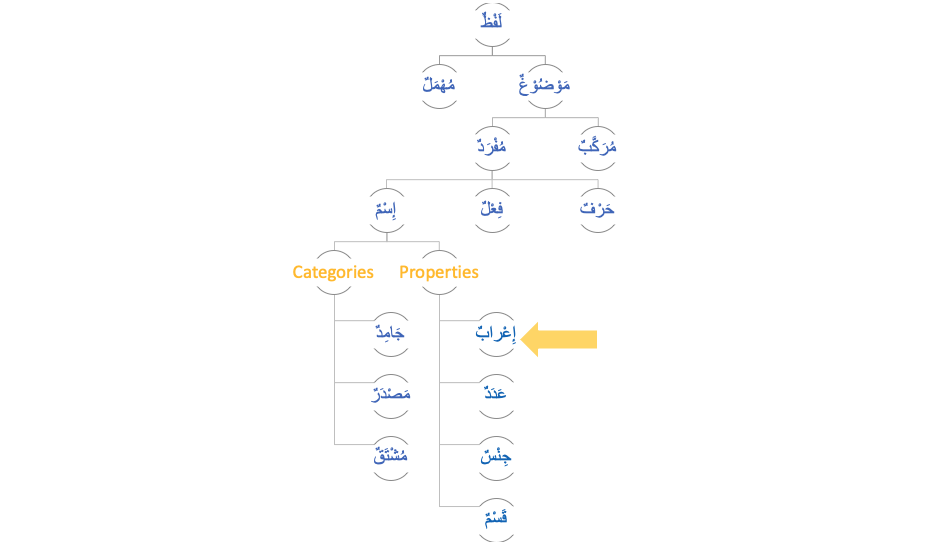
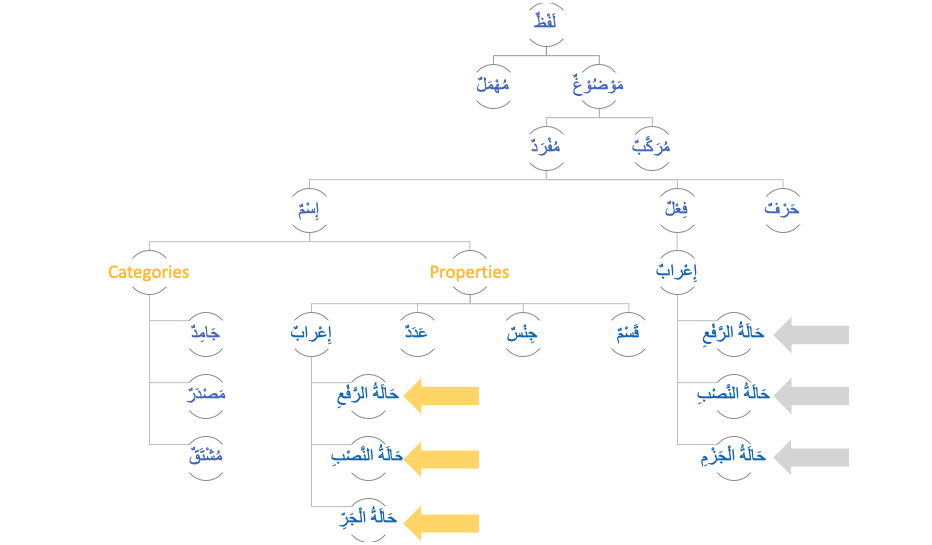
إِعْرابٌ (I’raab) is the condition/state (أَحْوالٌ) that occur at the ending of an إِسْمٌ and فِعْلٌ.
The condition/state (أَحْوالٌ) are four:
- حَالَةُ الرَّفْعِ (for short رَفْعٌ – Raf)
- حَالَةُ النَّصْبِ (for short نَصْبٌ – Nasb)
- حَالَةُ الْجَرِّ (for short جَرٌّ – Jarr)
- حَالَةُ الْجَزْمِ (for short جَزْمٌ – Jazm)
The إِسْمٌ [Ism] can only be in the state of رَفْعٌ or نَصْبٌ or جَرٌّ.
The فَعْلٌ [Fi’l] can only be in the state of رَفْعٌ or نَصْبٌ or جَزْمٌ.
This modules focus is the إِسْمٌ.
The إِعْرابٌ tells us the role of the إِسْمٌ in a sentence i.e. what is the إِسْمٌ doing in the sentence. More on this in the following lesson, this lesson will focus on how you can identify the states of the إِعْرابٌ i.e. جَزْمٌ , جَرٌّ, نَصْبٌ, رَفْعٌ through its signs.The most common signs are through the signs حَرَكَةٌ and حَرْفُ عِلَّةٍ.
حَالَةُ الرَّفْعِ
حَالَةُ الرَّفْعِ is the state in which the ضَمَّتَيْنِ/ ضَمَّةٌ (حَرَكَةٌ) or its substitute ‘حَرْفُ عِلَّةٍ) ‘و) appears at the end of a word.
Such a word is said to be مَرْفُوعٌ.
| Sign | Example |
|---|---|
| ــُـ ضَمَّةٌ ــّـ ضَمَّتَيْنِ | ٌمُسْلِم a Muslim |
| و | أَبُوْكَ Your Father |
حَالَةُ النَّصْبِ
حَالَةُ النَّصْبِ is the condition in which the فَتْحَتَيْنِ / فَتْحَةٌ (حَرَكَةٌ) or its substitute ‘حَرْفُ عِلَّةٍ) ‘ا) appears at the end of a word.
Such a word is said to be مَنْصُوبٌ.
| Sign | Example |
|---|---|
| ــَـ فَتْحَةٌ ــًـ فَتْحَتَيْنِ | ًمُسْلِما Muslim |
| ا | أَبَاكَ Your Father |
حَالَةُ الْجَرِّ
حَالَةُ الْجَرِّ is the condition in which the (حَرَكَةٌ) كَسْرَتَيْنِ / كَسْرَةٌ or its substitute (حَرْفُ عِلَّةٍ) ‘ي’ appears at the end of a word.
Such a word is said to be مَجْرُورٌ.
| Sign | Example |
|---|---|
| ــِـ كَسْرَةٌ ــٍـ كَسْرَتَيْنِ | ٍمُسْلِم Muslim |
| ي | أَبِيْكَ Your Father |
حَالَةُ الْجَزْمِ
حَالَةُ الْجَزْمِ is the condition in which a سُكُوْنٌ appears at the end of a word or its substitute ن in the case of فِعْلٌ مُضَارِعٌ is dropped from the end.
Such a word is said to be مَجْزُومٌ.
| Sign | Example |
|---|---|
| ــْـ سُكُوْنٌ | ْلَمْ يَضْرِب He did not hit |