Introduction
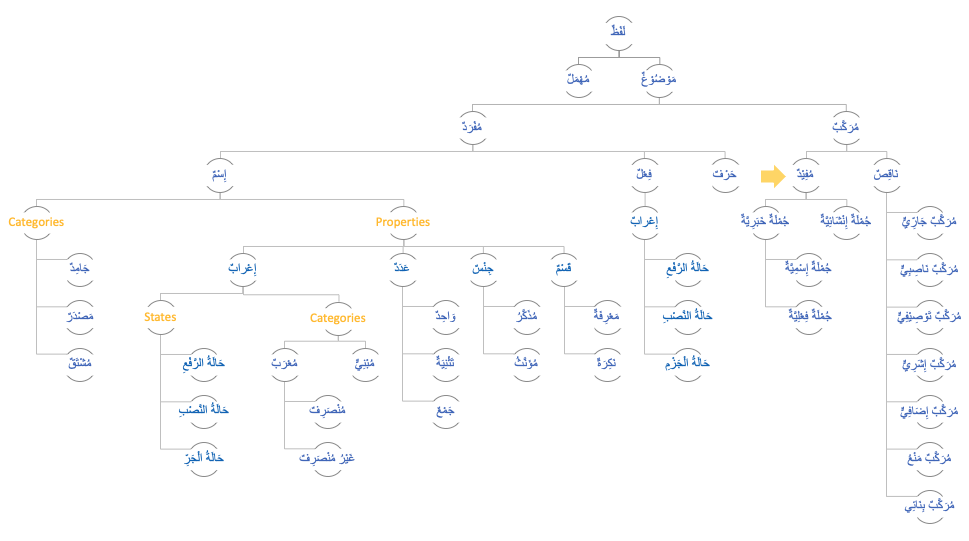
مُرَكَّبٌ (Compound) is a group of words of which there are two types:
- مُرَكَّبٌ مُفِيْدٌ : It is a group of words that together give a full meaning. We say this a complete sentence. It is often called كَلامٌ
- مُرَكَّبٌ غَيْرٌ مُفِيْدٌ : It is a group of words that together do not give a full meaning. We say this is an incomplete group of words i.e. a phrase. It is often called مُرَكَّبٌ نَآقِصٌ
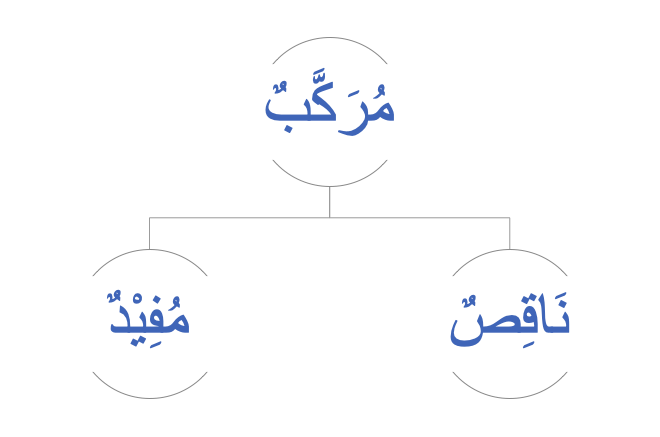
From hereon, when we use the word ‘sentence’ we will be referring to complete sentences, and when we use the word ‘phrase’ we will be referring to incomplete group of words.
In this module we will explore the sentences (مُرَكَّبٌ مُفِيْدٌ / كَلامٌ) that involve إِسْمٌ. Words and phrases come together to form sentences.
There are two types of sentences :
- جُمْلَةٌ خَبَرِيَّةٌ : It is that sentence, which has the possibility of being true of false. e.g. ‘The house is big’ – This statement can be judged as true or false, so it is جُمْلَةٌ خَبَرِيَّةٌ
- جُمْلَةٌ إنْشَائِيَّةٌ : It is that sentence, which does not have the possibility of being true of false. e.g.’Open the door!’ – This is a command, not a statement of fact, so it cannot be true or false, making it جُمْلَةٌ إِنْشَائِيَّةٌ.
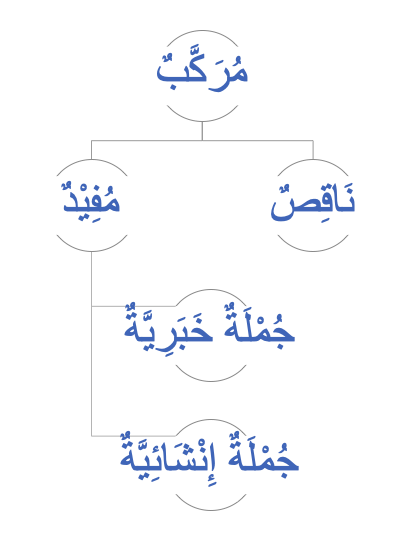
Furthermore جُمْلَةٌ خَبَرِيَّةٌ has two types:
- جُمْلَةٌ إِسْمِيَّةٌ : It is that sentence which usually begins with a إِسْمٌ.
- جُمْلَةٌ فِعْلِيَّةٌ : It is that sentence which begins with a فِعْلٌ.
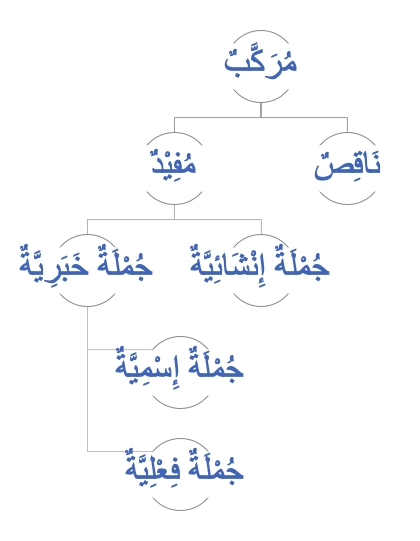
The subject of this module is the جُمْلَةٌ إِسْمِيَّةٌ.