
Pronouns
Pronouns in Arabic are called ضَمَائِرٌ. The singular name is ضَمِيْرٌ (Pronoun).
ضَمَائِرٌ are إِسْمٌ, therefore posses the four إِسْمٌ properties i.e. إِعْرابٌ, قَسْمٌ, جِنْسٌ, عَدَدٌ.
ضَمَائِرٌ are those إِسْمٌ, which are used in place of names and refer to the first person (مُتَكَلِّمٌ : Speaker, e.g. ‘I’ ), or the second person ( حَاضِرٌ : Present, e.g. ‘you’) or the third person (غَائِبٌ: Absent, e.g. ‘he’).
There are two types of ضَمَائِرٌ:
- الضَّمِيْرُ الْبَارِزُ : Visible Pronouns
- الضَّمِيْرُ الْمُسْتَتِرُ : Hidden Pronouns
الضَّمِيْرُ الْبَارِزُ
It is that that ضَمِيْرٌ which has a distinct form. It can appear on its own (unattached) or it can be attached to another word.
- ضَمِيْرٌ مُنْفَصِلٌ (Unattached pronoun).
- ضَمِيْرٌ مُتَّصِلٌ (Attached pronoun).
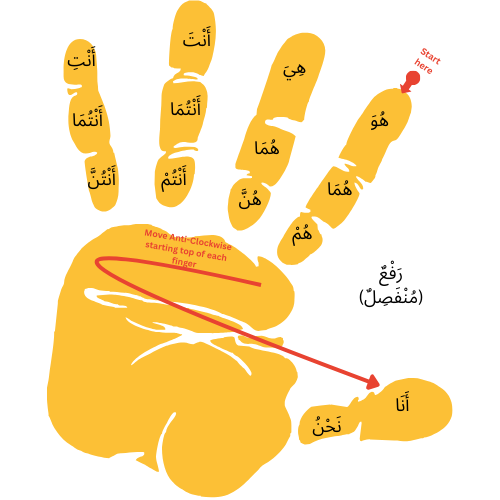
ضَمِيْرٌ مُنْفَصِلٌ (Unattached pronoun) is always in the رَفْعٌ state.
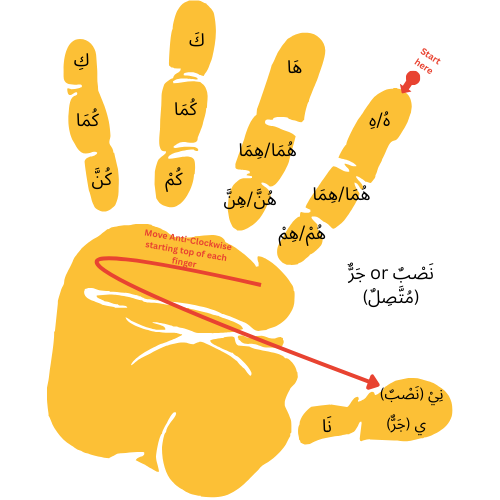
ضَمِيْرٌ مُتَّصِلٌ (Attached pronoun) is either in نَصْبٌ or جَرٌّ states, depending on what they are attached to:
a) ضَمِيْرٌ مُتَّصِلٌ is نَصْبٌ in two cases:
- Attached to a حَرْفٌ نَصْبٌ
- Attached to a فِعْلٌ
b) ضَمِيْرٌ مُتَّصِلٌ is جَرٌّ in two cases:
- Attached to حَرْفٌ جَرٌّ
- Attached to an إِسْمٌ (when مُضَافٌ إِلَيْهِ)
The table below shows both the مُنْفَصِلٌ and مُتَّصِلٌ forms of the ضَمَائِرٌ covering the four إِسْمٌ properties i.e. إِعْرابٌ, قَسْمٌ, جِنْسٌ, عَدَدٌ.
Remember with respect to قَسْمٌ the pronouns are all مَعْرِفَةٌ (proper).
| Person | جِنْسٌ | إِعْرابٌ | وَاحِدٌ | تَثْنِيَةٌ | جَمْعٌ |
|---|---|---|---|---|---|
| 3rd Person (غَائِبٌ) | مُذَكَّرُ | Pronoun | He | They two | They |
| رَفْعٌ (مُنْفَصِلٌ) | هُوَ | هُمَا | هُمْ | ||
| نَصْبٌ or جَرٌّ (مُتَّصِلٌ) | هُ or هِ | هُمَا or هِمَا | هُمْ or هِمْ | ||
| مُؤَنَّثُ | Pronoun | She | They two | They | |
| رَفْعٌ (مُنْفَصِلٌ) | هِيَ | هُمَا | هُنَّ | ||
| نَصْبٌ or جَرٌّ (مُتَّصِلٌ) | هَا | هُمَا or هِمَا | هُنَّ or هِنَّ | ||
| 2nd Person (حَاضِرٌ) | مُذَكَّرُ | Pronoun | You | You two | You |
| رَفْعٌ (مُنْفَصِلٌ) | أَنْتَ | أَنْتُمَا | أَنْتُمْ | ||
| نَصْبٌ or جَرٌّ (مُتَّصِلٌ) | كَ | كُمَا | كُمْ | ||
| مُؤَنَّثُ | Pronoun | You | You two | You | |
| رَفْعٌ (مُنْفَصِلٌ) | أَنْتِ | أَنْتُمَا | أَنْتُنَّ | ||
| نَصْبٌ or جَرٌّ (مُتَّصِلٌ) | كِ | كُمَا | كُنَّ | ||
| 1st Person (مُتَكَلِّمٌ) | مُذَكَّرُ & مُؤَنَّثُ | Pronoun | I | We | |
| رَفْعٌ (مُنْفَصِلٌ) | أَنَا | نَحْنُ | |||
| نَصْبٌ or جَرٌّ (مُتَّصِلٌ) | نِيْ:نَصْبٌ ي:جَرٌّ | نَا | |||

You must memorise the Pronoun Table.
Helpful way to memorise – Knowing that it is at your fingertips.
الضَّمِيْرُ الْمُسْتَتِرُ
الضَّمِيْرُ الْمُسْتَتِرُ the hidden pronoun is that ضَمِيْرٌ which is not visible but is implied. A hidden ضَمِيْرٌ can only appear in the رَفْعٌ state. We will be discussing الضَّمِيْرُ الْمُسْتَتِرُ in future lessons.