
الجُمْلَةِ الفِعْلِيَّةِ

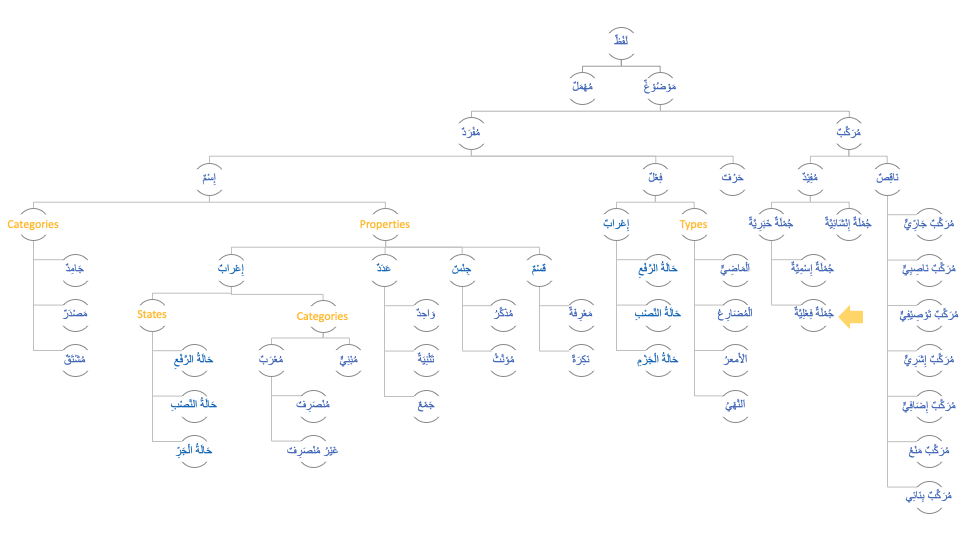
This lesson discusses the جُمْلَةِ فِعْلِيَّةِ.

جُمْلَةٌ فِعْلِيَّةٌ : It is that sentence which begins with a فِعْلٌ.
Parts of a جُمْلَةِ فِعْلِيَّةِ
There are four parts to a basic جُمْلَةِ فِعْلِيَّةِ:
- The فِعْلٌ
- The doer فَاعِلٌ in the case of an active verb (الفِعْلُ الْمَبْنِيُّ لِلْمَعْلُومِ) or done-to نَائِبُالفَاعِلِ in the case of a passive verb (الفِعْلُ الْمَبْنِيُّ لِلْمَجْهُولِ). These are always رَفْعٌ
- The details مَفْعُوْلٌ. This is always نَصْبٌ
- A جارٌّ وَمَجْرُورٌ phrase which is is called مُتَعَلِّقٌ بِالفِعْلِ (related to the فِعْلٌ)
Every جُمْلَةِ الفِعْلِيَّةِ must have a فِعْلٌ and a نَائِبُالفَاعِلِ/ فَاعِلٌ. The مَفْعُوْلٌ and the مُتَعَلِّقٌ بِالفِعْلِ may or may not be present.
Interesting point to note, a فِعْلٌ is considered a complete sentence on its own, because it not only tells you what was done, but also who did it. Thus the simplest جُمْلَةٌ فِعْلِيَّةٌ (Verb Sentence) is simply a فِعْلٌ on its own.
Example 1:
ذَهَبْتُمْ
You all went
| Grammatical Analysis | Meaning | |
|---|---|---|
| Past-tense فِعْلٌ with the doer being the inside pronoun (ضَمَيْرٌ مُسْتَتِرٌ) أَنْتُمْ | You all went | ذَهَبْتُمْ |
Example 2 :
عَلَّمَ القُرْآنَ
He taught the Quran
| Grammatical Analysis | Meaning | |
|---|---|---|
| Past-tense فِعْلٌ with the doer being the inside pronoun (ضَمَيْرٌ مُسْتَتِرٌ) هُوَ | He taught | عَلَّمَ |
| Detail (مَفْعُوْلٌ) in نَصْبٌ state. | the Quran | القُرْآنَ |
Example 3 :
رَأَيْتَ النَّاسَ مِنَ البَيْتِ
You saw the people from the house
| Grammatical Analysis | Meaning | |
|---|---|---|
| Past-tense فِعْلٌ with the doer being the inside pronoun (ضَمَيْرٌ مُسْتَتِرٌ) أَنْتَ | You saw | رَأَيْتَ |
| Detail (مَفْعُوْلٌ) in نَصْبٌ state. | the people | النَّاسَ |
| مُتَعَلِّقٌ بِالفِعْلِ (related to the فِعْلٌ). (A جارٌّ وَمَجْرُورٌ phrase) | from the house | مِنَ البَيْتِ |