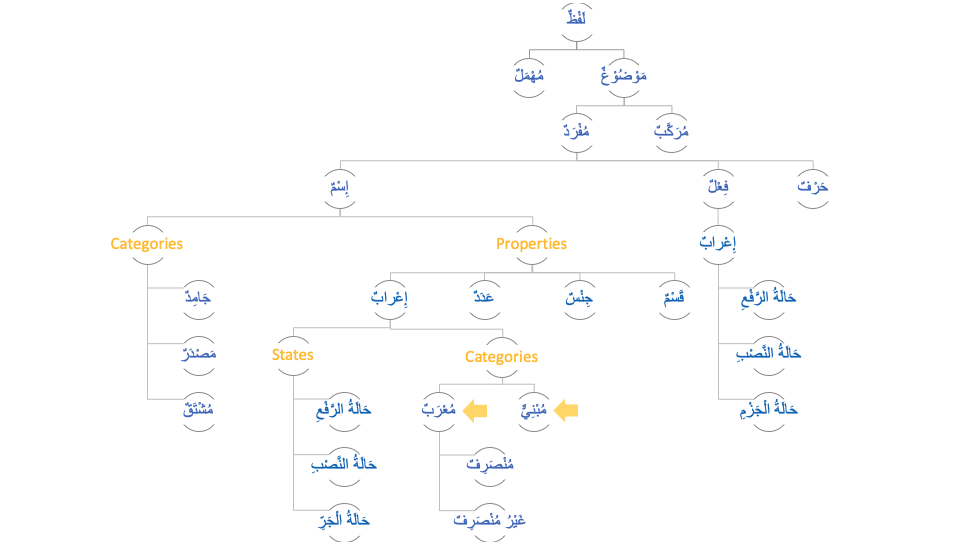
Declinable & Indeclinable Words – اَلْمُعْرَبُ وَ الْمُبْنِيٌّ
When a word is able to show that it can change with its states, as in the previous lessons with the words الله and مُحَمَّد and رَجُل ,we say that the word is declinable مُعْرَبٌ. Where a word does not show change we say it is indeclinable مَبْنِيٌّ.
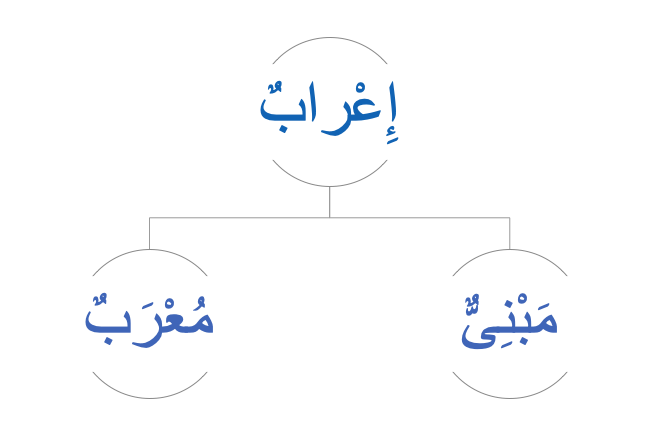
مُعْرَب
As you saw from the previous lesson the words الله and مُحَمَّد and رَجُل fully declined which means they showed change in all states i.e. accepted the signs associated with the states رَفْعٌ , نَصْبٌ and جَرٌّ . The words that are able to do this are referred to as مُنْصَرِفٌ.
Example:
| State | Example |
|---|---|
| رَفْعٌ | ٌمُسْلِم a Muslim |
| نَصْبٌ | ًمُسْلِما a Muslim |
| جَرٌّ | ٍمُسْلِم a Muslim |
However, there are certain words that only partly decline these are referred to as غَيْرُ مُنْصَرِفٌ.
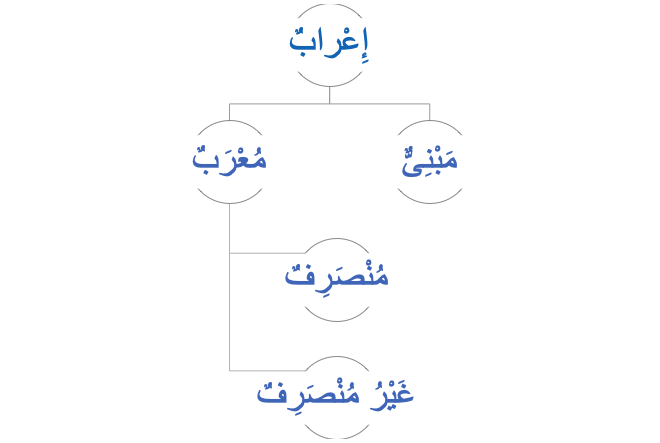
غَيْرُ مُنْصَرِفٌ words:
- Do not accept (ـِ) كَسْرَةٌ , and therefore uses only two signs the ضَمَّةٌ (ـُ) and فَتْحَةٌ (ـَ). In the state:
- رَفْعٌ it accepts ضَمَّةٌ (ـُ) sign.
- نَصْبٌ it accepts فَتْحَةٌ (ـَ) sign.
- جَرٌّ it does not accept (ـِ) كَسْرَةٌ sign, instead uses the فَتْحَةٌ (ـَ) sign.
- Do not Accept تَنْوِيْنٌ (ـٍ ـً ـٌ).
So غَيْرُ مُنْصَرِفٌ words can show some change, but not all.
Words which are غَيْرُ مُنْصَرِفٌ include:
1. Names of places
| غَيْرُ مُنْصَرِفٌ (Partly Declinable) | رَفْعٌ | نَصْبٌ | جَرٌّ |
|---|---|---|---|
| Places with more than 3 letters | مَكَّةُ | مَكَّةَ | مَكَّةَ |
| ِException: Places with only 3 letters are مُنْصَرِفٌ (Fully Declinable) | عَدْنٌ | عَدْناً | عَدْنٍ |
2. Non- Arab names
| غَيْرُ مُنْصَرِفٌ (Partly Declinable) | رَفْعٌ | نَصْبٌ | جَرٌّ |
|---|---|---|---|
| Non- Arab Names | إِبْرَاِّيْمُ | إِبْرَاِّيْمَ | إِبْرَاِّيْمَ |
| ِException: Non-Arab Names with 3 letters and with sukoon (ـْ) in the middle are مُنْصَرِفٌ (Fully Declinable) | نُوْحٌ | نُوْحاً | نُوْحٍ |

There are only four Arab Prophets mentioned in the Quran: شُعَيْبٌ , هُوْدٌ , صَالِحٌ , مُحَمَّدٌ and since they are Arab names, they are مُنْصَرِفٌ (Fully Declinable). If you memorise these it will become easy to recognise that almost all other names mentioned in the Quran are غَيْرُ مُنْصَرِفٌ (Partly Declinable)
3. Names of colours e.g. حَمْرآءُ ,أَحْمَرُ
4. Comparatives e.g. أَكْبَرُ, أَحْكَمُ
5. Body Defects e.g. أَعْوَجُ (crooked) and أَبْكَمُ (mute)
6. Certain Broken Plurals with alif in the middle e.g. مَفَاتِيْحُ ,مَسَاجِدُ
Two Exceptions exists for 3 – 6:
- When ال is added
- When it is a مُضَافٌ
The Natural state of the إِسْمٌ is رَفْعٌ, when the state changes we say it is declining.
مَبْنِيٌّ
As mentioned earlier, a مُبْنِيٌّ is that word that does not show change i.e. it looks the same in all states.
Lets take the word هٰذَا :
جَاءَهٰذَا
This came
رَأَيْتَ هٰذَا
I saw this
مَرَرْتُ بِهٰذَا
I passed by this
Did you Notice that the ending of هٰذَا remained constant and did not change despite the grammatical condition existing.
In the sentence جَاءَهٰذَا, the word هٰذَا is in the state of رَفْعٌ and thus considered مَرْفُوعٌ. This is because, according to the rules of Arabic grammar, the doer of the sentence is always مَرْفُوعٌ. Since هٰذَا has the role of the doer of the action (فَاعِل) of the verb جَاءَ it is therefore in the state of رَفْعٌ and hence مَرْفُوعٌ. However, هٰذَا is a demonstrative pronoun (اسم إشارة) and is مَبْنِي, meaning its ending does not change. Therefore, although هٰذَا occupies the position of رَفْعٌ, it does not take a visible sign of رَفْعٌ. In summary we say:
هٰذَا: اسْمُ إِشَارَةٍ مَبْنِيٌّ عَلَى السُّكُونِ فِي مَحَلِّ رَفْعٍ فَاعِلٌ.
هٰذَا is a demonstrative pronoun, indeclinable (مَبْنِي) upon sukoon (ـْ), and it occupies the state of رَفْعٌ as the subject (doer of the action).
In the sentence رَأَيْتَ هٰذَا, the word هٰذَا is in the state of نَصْبٌ and thus considered مَنْصُوبٌ. This is because, according to the rules of Arabic grammar, the word that receives the action of the verb(that is, the مَفْعُولٌ بِهِ) is always مَنْصُوبٌ. Since هٰذَا has the role of the word that receives the action of the verb رَأَيْتَ ( مَفْعُولٌ بِهِ), it is therefore in the state of نَصْبٌ and hence مَنْصُوبٌ. However, هٰذَا is a مَبْنِي demonstrative pronoun, meaning its ending does not change. Therefore, although هٰذَا occupies the position of نَصْبٌ, it does not take a visible sign of نَصْبٌ. In summary we say:
هٰذَا: اسْمُ إِشَارَةٍ مَبْنِيٌّ عَلَى السُّكُونِ فِي مَحَلِّ نَصْبٍ مَفْعُولٌ بِهِ
هٰذَا is a demonstrative pronoun, indeclinable(مَبْنِي) upon sukoon(ـْ), and it occupies the state of نَصْب as the direct object (the receiver of the action)
In the sentence مَرَرْتُ بِهٰذَا, the word هٰذَا is in the state of جَرّ and thus considered مَجْرُورٌ. This is because, according to the rules of Arabic grammar, any إِسْمٌ that follows a حَرْفٌ is always مَجْرُورٌ. Sinceهٰذَ ا follows the preposition بِ, it is therefore in the state of جَرّ and hence مَجْرُورٌ. However, هٰذَا is a مَبْنِي demonstrative pronoun, meaning its ending does not change. Therefore, although هٰذَا occupies the position of جَرّ, it does not take a visible sign of جَرّ.ّ In summary we say:
هٰذَا: اسْمُ إِشَارَةٍ مَبْنِيٌّ عَلَى السُّكُونِ فِي مَحَلِّ جَرٍّ بِالْبَاءِ
هٰذَا is a demonstrative pronoun, indeclinable (مَبْنِي) upon sukoon (ـْ), and it occupies the state of جَرّ due to the بِ.
Words which are مَبْنِيٌّ include:
- Words ending in alif e. دُنْيا , مُوسىٰ
- Singular, dual and plural الَّذِي ,الَّذَانِ ,الَّذِيْنَ ,اَّلَّتِي ,الَّتانِ ,اللَّائِي/الَّوتي :الأَسْماءُ المَوْصؤلَةُ
- The singular and the plural أُولآئِكَ ,تِلْكَ ,ذَلِكَ ,هؤُلاءِ ,هذِهِ ,هذا :الأَسْماءُ الإِشَارةِ