
مُرَكَّبَ إِضَافِيٌّ

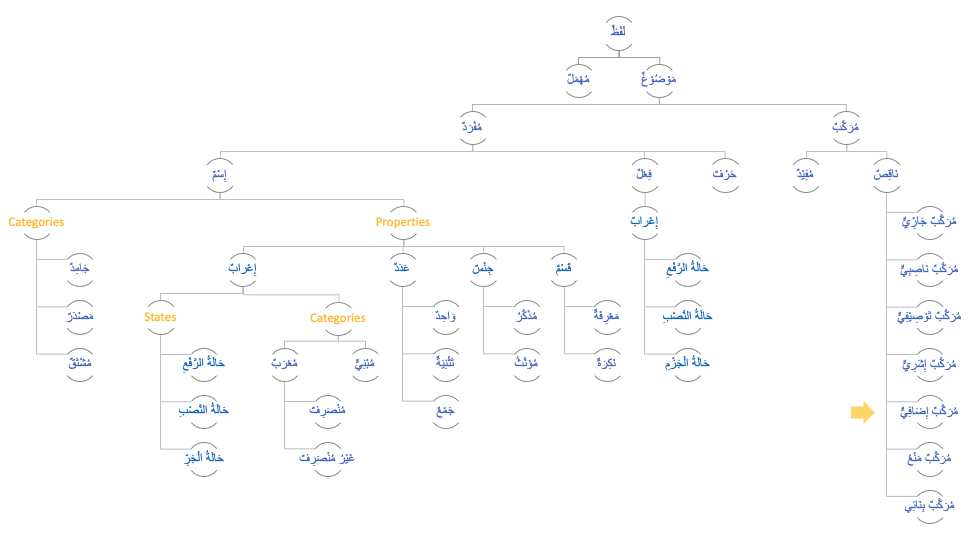
مُرَكَّبَ إِضَافِيٌّ (also referred to as الإِضَافَة) is a phrase that brings two إِسْمٌ together. The first إِسْمٌ is attributed to the second إِسْمٌ.
The first إِسْمٌ is called مُضَافٌ , and the second إِسْمٌ is called مُضَافٌ إَلّيْهِ.
Rules
إِضَافَةٌ Rules:
1. The مُضَافٌ إَلّيْهِ is always after the مُضَافٌ with no long distance relationship. i.e nothing comes between the مُضَافٌ and its مُضَافٌ إَلّيْهِ.
2. The مُضَافٌ never gets a ال.
3. The مُضَافٌ never gets تَنْوِيْنٌ ( -ٌ -ً -ٍ).
4. The مُضَافٌ إَلّيْهِ is always in theجَرٌّ state.
5. The قَسْمٌ property ( i.e. whether it is نَكِرةٌ (Common) or مَعْرِفَةٌ (proper) ) of مُضَافٌ is dictated by مُضَافٌ إَلّيْهِ.
Usage
The إِضَافَة construction in Arabic is highly versatile and is used in several important ways. Depending on the context, الإِضَافَة can convey various meanings. The main usages of الإِضَافَة are as follows:
- Meaning of “of”
- Possession / Ownership
- With ظَرْفٌ (Time and Place)
- With الأَسْمَاءُ الخَمْسَةُ
- With صِفَةٌ
- With أَسْما ءُ الإِشارَةِ
- Chain الإِضَافَة
Meaning of “of”
Used to link two إِسْمٌ, where the second إِسْمٌ defines or specifies the first.
Lets work through an example:
إِمَامُ المَسْجِدِ
Imam of the masjid
Explanation:
- إِمَامُ is the مُضَافٌ
- المَسْجِدِ is the مُضَافٌ إَلّيْهِ
- مُضَافٌ إَلّيْهِ is directly after مُضَافٌ the without any other word in between.
- إِمَامُ does not have the ال
- إِمَامُ does not have the تَنْوِيْنٌ ( -ٌ -ً -ٍ)
- المَسْجِدِ is inجَرٌّ state as indicated by the ــِـ كَسْرَةٌ
- إِمَامُ is مَعْرِفَةٌ because the مُضَافٌ إَلّيْهِ is مَعْرِفَةٌ.
- The meaning ‘of‘ was inserted between the two إِسْمٌ as in ‘Imam of the masjid’
Possession / Ownership
Indicates that something belongs to someone or something else.
Lets work through an example:
كَتَابُ زَيْدٍ
Zayd’s book
Explanation:
- كَتَابُ is the مُضَافٌ
- زَيْدٍ is the مُضَافٌ إَلّيْهِ
- مُضَافٌ إَلّيْهِ is directly after مُضَافٌ the without any other word in between.
- كَتَابُ does not have the ال
- كَتَابُ does not have the تَنْوِيْنٌ ( -ٌ -ً -ٍ)
- زَيْدٍ is inجَرٌّ state as indicated by the ــٍـ كَسْرَتَيْنِ
- كَتَابُ is مَعْرِفَةٌ because the مُضَافٌ إَلّيْهِ is مَعْرِفَةٌ.
- The meaning possession is implied. The second word owns the first word i.e. Zayd possesses the book.
Lets work through another example to explain the ‘possession’ usage this time using a pronoun:
بَيْتُهُ
His house
Explanation:
- بَيْتُ is the مُضَافٌ
- هُ is the مُضَافٌ إَلّيْهِ
- مُضَافٌ إَلّيْهِ is directly after مُضَافٌ the without any other word in between.
- بَيْتُ does not have the ال
- بَيْتُ does not have the تَنْوِيْنٌ ( -ٌ -ً -ٍ)
- هُ is inجَرٌّ state of the ‘he’ pronoun form
- بَيْتُ is مَعْرِفَةٌ because the مُضَافٌ إَلّيْهِ is مَعْرِفَةٌ.
- The meaning possession is implied. The second word owns the first word i.e. he possesses the house.
With ظَرْفٌ
Another usage of the الإِضَافَة appears with certain special إِسْمٌ when they take the role of مُضَافٌ. These إِسْمٌ indicate time or place and are known as ظَرْفٌ (plural: ظُرُوفٌ).
ظُرُوفٌ function almost always as مُضَافٌ, and therefore require a مُضَافٌ إِلَيْهِ to complete their meaning.
| ظَرْفٌ | Meaning |
|---|---|
| فَوْقَ | above |
| قَبْلَ | before |
| بَيْنَ | between |
| غَيْر | other than |
| عِنْدَ | with at has by/besides |
| كُلّ | each all every the whole |
| تَحْتَ | below |
| أَمَامَ | in front of |
| وَرآءَ | behind beyond |
| أَيّ | which any |
| حَوْلَ | around surrounding |
| مَعَ | with |
| بَعْدَ | after |
| خَلْفَ | behind |
| لَدُنْ | especially from |
| قُدّامَ (This is not in Quran) | which any |
| بَعْضَ | some some of |
| دُوْنَ | besides other than |

With respect to the words above that do not show a حَرَكَةٌ on their final letter, these words are مُعْرَبٌ (declinable). As a result, the final حَرَكَةٌ is not fixed and instead changes according to the word’s grammatical role in the sentence.
Lets work through an example to explain the ظَرْفٌ usage:
تَحْتَ الأَرْضِ
under the earth
Explanation:
- تَحْتَ is the مُضَافٌ
- الأَرْضِ is the مُضَافٌ إَلّيْهِ
- مُضَافٌ إَلّيْهِ is directly after مُضَافٌ the without any other word in between.
- تَحْتَ does not have the ال
- تَحْتَ does not have the تَنْوِيْنٌ ( -ٌ -ً -ٍ)
- الأَرْضِ is inجَرٌّ state indicated by the ــِـ كَسْرَةٌ
- تَحْتَ is مَعْرِفَةٌ because the مُضَافٌ إَلّيْهِ is مَعْرِفَةٌ.
- The meaning of ظَرْفٌ) تَحْتَ) is explicit.
With الأَسْمَاءُ الخَمْسَةُ
The الأَسْمَاءُ الخَمْسَةُ are five special إِسْمٌ. These are special because when these words are مُضَافٌ their state is not shown through حَرَكَةٌ, rather through the (حَرْفُ عِلَّةٍ) ي , ا , و.
رَفْعٌ state uses و
نَصْبٌ state uses ا
جَرٌّ state uses ي
| الأَسْمَاءُ الخَمْسَةُ | Regular | مُضَافٌ | State |
|---|---|---|---|
| Father | أَبٌ | أَبُو | رَفْعٌ |
| أَباً | أَبا | نَصْبٌ | |
| أَبٍ | أَبِي | جَرٌّ | |
| Brother | أَخٌ | أَخُو | رَفْعٌ |
| أَخاً | أَخا | نَصْبٌ | |
| أَخٍ | أخِي | جَرٌّ | |
| Mouth | فَمٌ | فُو | رَفْعٌ |
| فَماً | فا | نَصْبٌ | |
| فَمٍ | فِي | جَرٌّ | |
| In-Law | حَمٌ | حَمُو | رَفْعٌ |
| حَماً | حَما | نَصْبٌ | |
| حَمٍ | حَمِي | جَرٌّ | |
| Possessor-of | N/A | ذُو | رَفْعٌ |
| N/A | ذَا | نَصْبٌ | |
| N/A | ذِي | جَرٌّ |
ذُو is always a مُضَافٌ, unlike the others, it never stands alone.
With صِفَةٌ
صِفَةٌ is a describing إِسْمٌ (Adjective) like short, tall, fat, slim etc.
1. If a صِفَةٌ of the مُضَافٌ is intended then:
- صِفَةٌ should come immediately after the مُضَافٌ إَلّيْهِ
- صِفَةٌ should be with an ال and
- صِفَةٌ should have the same إِعْرابٌ as the مُضَافٌ.
Lets work through an example to explain when صِفَةٌ of the مُضَافٌ is intended:
بَابُ الْبَيْتِ الْجَدِيْدُ
under the earth
Explanation:
- بَابُ is the مُضَافٌ.
- الْبَيْتِ is the مُضَافٌ إَلّيْهِ.
- الْجَدِيْدُ is the صِفَةٌ.
- الْجَدِيْدُ comes immediately after the مُضَافٌ إَلّيْهِ.
- الْجَدِيْدُ has an ال.
- الْجَدِيْدُ has the same إِعْرابٌ as the مُضَافٌ, in this instance the ضَمَّةٌ -ُ.
2. If a صِفَةٌ of the مُضَافٌ إَلّيْهِ is intended then:
- صِفَةٌ should come immediately after the مُضَافٌ إَلّيْهِ
- صِفَةٌ should have the same إِسْمٌ properties ( إِعْرابٌ , قَسْمٌ , عَدَدٌ ,جِنْسٌ) as the مُضَافٌ إَلّيْهِ.
- The صِفَةٌ will also be regarded as مُضَافٌ إَلّيْهِ.
Lets work through an example to explain when صِفَةٌ of the مُضَافٌ إَلّيْهِ is intended:
بَابُ الْبَيْتِ الْجَدِيْدِ
under the earth
Explanation:
- بَابُ is the مُضَافٌ.
- الْبَيْتِ is the مُضَافٌ إَلّيْهِ
- الْجَدِيْدِ is the صِفَةٌ
- الْجَدِيْدِ comes immediately after the مُضَافٌ إَلّيْهِ.
- الْجَدِيْدِ has the same إِسْمٌ properties ( إِعْرابٌ , قَسْمٌ , عَدَدٌ ,جِنْسٌ) as the مُضَافٌ إَلّيْهِ
- الْجَدِيْدِ is also مُضَافٌ إَلّيْهِ
With أَسْما ءُ الإِشارَةِ
In Arabic أَسْما ءُ الإِشارَةِ are إِسْمٌ used to point to other إِسْمٌ. In English, these are called demonstrative pronouns, such as ‘this’, ‘that’, ‘these’ and ‘those’.
Before moving on to how أَسْمَاءُ الإِشَارَةِ are used in الإِضَافَة, let us first briefly remind ourselves of how to form an أَسْمَاءُ الإِشَارَةِ phrase (an incomplete sentence):
1. Remember أَسْما ءُ الإِشارَةِ are always مَعْرِفَةٌ (proper).
2. The مُشَارٌ إِليهِ must have an ال.
If مُشَارٌ إِليهِ didn’t have an ال it would be a complete sentence. e.g. هٰذَا رَجُلٌ (This is a man)
3. The أَسْما ءُ الإِشارَةِ and مُشَارٌ إِليهِ have the matching 4 إِسْمٌ properties ( إِعْرابٌ , قَسْمٌ , عَدَدٌ ,جِنْسٌ).
Now let us look at its usage in the الإِضَافَة.
The rule when you want to point at a مُضَافٌ:
- Place the أَسْما ءُ الإِشارَةِ after the مُضَافٌ إَلّيْهِ.
أَسْما ءُ الإِشارَةِ phrase rules vs الإِضَافَة rules
Wait! we have a problem, there seems to be a clash of rules between the أَسْما ءُ الإِشارَةِ phrase rules and the الإِضَافَة rules. The أَسْما ءُ الإِشارَةِ phrase rules state that مُشَارٌ إِليهِ must have an ال but we know that the مُضَافٌ cannot have an ال. therefore a compromise was reached to place the أَسْما ءُ الإِشارَةِ after the مُضَافٌ إَلّيْهِ, deviating from the standard مُرَكَّبَ تَوْصِيْفِيٌّ phrase structure.
أَسْما ءُ الإِشارَةِ phrase rules vs الإِضَافَة rules
Wait! we have a problem, there seems to be a clash of rules between the أَسْما ءُ الإِشارَةِ phrase rules and the الإِضَافَة rules. The أَسْما ءُ الإِشارَةِ phrase rules state that مُشَارٌ إِليهِ must have an ال but we know that the مُضَافٌ cannot have an ال. Therefore a compromise was reached to place the أَسْما ءُ الإِشارَةِ after the مُضَافٌ إَلّيْهِ, deviating from the standard مُرَكَّبَ تَوْصِيْفِيٌّ phrase structure.
To understand this let’s walk through an example. lets take the phrase ‘This path of mine’.Step 1 : solving the الإِضَافَة results in سَبِيْلِيْ (path of mine).
Step 2 : adding the أَسْما ءُ الإِشارَةِ (bearing in mind the rule that it must be followed by an ال). results in هَٰذِهِ السَّبِيْلِيْ.
Step 3 : We have a problem, the مُضَافٌ can not take an ال. Therefore remove ال. Resulting in هَٰذِهِ سَبِيْلِيْ (This is my path) which is now a sentence rather than the phrase we wanted (i.e. This path of mine).
Step 4 : The only option is to move the أَسْما ءُ الإِشارَةِ to the end of the الإِضَافَة resulting in سَبِيْلِيْ هَٰذِهِ which now translates the desired result ”This path of mine”.
Key Takeaway: When an أَسْمَاءُ الإِشَارَةِ refers to a مُضَافٌ, it comes after the مُضَافٌ إِلَيْهِ, not before the مُضَافٌ.
الإِضَافَة Chain
Sometimes many مُضَافٌ and مُضَافٌ إَلّيْهِ are found in one single phrase for example:
بَابُ بَيْتِ الرَّجُل
the door of the man’s house
Explanation:
- بَابُ is the مُضَافٌ to بَيْتِ
- بَيْتِ is the مُضَافٌ إَلّيْهِ to بَابُ
- بَيْتِ is also the مُضَافٌ to الرَّجُل
- الرَّجُل is the مُضَافٌ إَلّيْهِ to بَيْتِ
Furthermore, another rule to bear in mind is that the إِعْرَابٌ of the مُضَافٌ will be according to the عَامِلٌ governing it. For example:
فِي كِتَا بِ اللهِ
In the Book of Allah [9:36]
ِExplanation:
- فِي is the حَرْفُ جَرٍّ (the governing عَامِلٌ)
- كِتَابِ is مُضَافٌ
- كِتَاب is مجرورٌ (in theجَرٌّ state) as it is governed by فِي
- لَفْظُ الْجَلَالَةِ is مُضَافٌ إِلَيْهِ
This shows clearly that the مُضَافُ takes كَسْرَةٌ (ـِ) because of the عَامِلٌ (فِي).