
Simple جُمْلَةٌ إِسْمِيَّةٌ

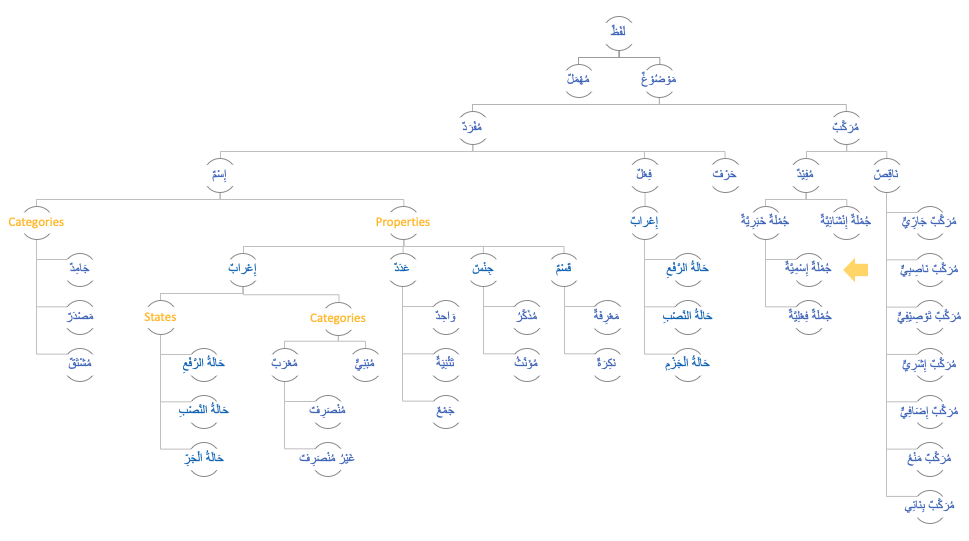

- The definition of a جُمْلَةٌ إِسْمِيَّةٌ is that it is that sentence which usually begins with an اِسْمٌ.
- جُمْلَةٌ إِسْمِيَّةٌ is a جُمْلَةٌ خَبَرِيَّةٌ.
- جُمْلَةٌ خَبَرِيَّةٌ : It is that sentence, which has the possibility of being true of false. e.g. ‘The house is big’ – This statement can be judged as true or false, so it is جُمْلَةٌ خَبَرِيَّةٌ.
A simple جُمْلَةٌ إِسْمِيَّةٌ is a sentence that has the word ‘is’ implied in the sentence. for example:
أَنَا مُسْلِمٌ
He is a muslim
أَنَا طَالِبٌ
i am a student
هُمْ مُؤْمِنُونَ
they are believers
The word ‘is’ does not exist in Arabic, It is implied/understood/hidden.
In English, the ‘is’ is the verb “to be” (is / am / are).
In Arabic the hidden ‘is’ can be found in the following 5 circumstances:
- ضَمِيْرٌ مُنْفَصِلٌ (Unattached pronoun)
- مَعْرِفَةٌ (Proper/definite) followed by نَكِرةٌ (common/indefinite) اِسْمٌ
- اسْمٌ الْإِشَارَةِ ( Pointer words/Demonstrative Pronouns) followed by other than ال.
- حَرْفٌ نَصْبٍ and its إِسْمٌ مَنْصُوبٌ
- A break in the chain
1. ضَمِيْرٌ مُنْفَصِلٌ (Unattached pronoun)
1. ضَمِيْرٌ مُنْفَصِلٌ (Unattached pronoun) are usually followed by the verb ‘to be’ i.e.’is/am/are’ in the English translation, and therefore implied in Arabic. e.g.
أَنَا مُسْلِمٌ
He is a muslim
| Grammatical Analysis | Meaning | |
|---|---|---|
| أَنَا is the مُبْتَدأٌ. It is an ضَمِيْرٌ مُنْفَصِلٌ and hence an اِسْمٌ which is مَرْفُوعٌ and مَعْرِفَةٌ. | He | أَنَا |
| مُسْلِمٌ is the خَبَرٌ. It is an اِسْمٌ which is مَرْفُوعٌ and نَكِرةٌ (Common/Indefinite). | a muslim | مُسْلِمٌ |
| The English verb ‘is’ is implied between the أَنَا and مُسْلِمٌ. This is because أَنَا is ضَمِيْرٌ مُنْفَصِلٌ and it is usually followed by the verb ‘to be’ i.e.’is/am/are’ | ||
2. مَعْرِفَةٌ (Proper/definite) followed by نَكِرةٌ (common/indefinite) اِسْمٌ
مَعْرِفَةٌ (Proper/definite) followed by نَكِرةٌ (common/indefinite) اِسْمٌ. In this case English translation usually inserts the verb ‘to be’ i.e.’is/am/are’ , and therefore is implied in Arabic.e.g.
ٱلكُتُبُ صِغِيْرَةٌ
The books are small.
| Grammatical Analysis | Meaning | |
|---|---|---|
| ٱلكُتُبُ is the مُبْتَدأٌ . It is an اِسْمٌ which is مَرْفُوعٌ and مَعْرِفَةٌ (Proper/Definite). | The books | ٱلكُتُبُ |
| صِغِيْرَةٌ is the خَبَرٌ. It is an اِسْمٌ which is مَرْفُوعٌ and نَكِرةٌ (Common/Indefinite). | small | صِغِيْرَةٌ |
| The English verb ‘are’ is implied between the ٱلكُتُبُ and صَغِيرَةٌ. This is because ٱلكُتُبُ is مَعْرِفَةٌ and it is followed by صِغِيْرَةٌ which is نَكِرةٌ. | ||
3. اسْمٌ الْإِشَارَةِ ( Pointer words/Demonstrative Pronouns) followed by other than ال
اسْمٌ الْإِشَارَةِ ( Pointer words/Demonstrative Pronouns) followed by other than ال. In this case English translation usually inserts the verb ‘to be’ i.e.’is/am/are’ , and therefore is implied in Arabic.e.g.
هٰذَا بَيْتٌ
This is a house
| Grammatical Analysis | Meaning | |
|---|---|---|
| هٰذَا is the مُبْتَدأٌ. It is an اسْمٌ الْإِشَارَةِ) اِسْمٌ) which is مَرْفُوعٌ and مَعْرِفَةٌ. n.b. It is not followed by an ال. | This | هٰذا |
| بَيْتٌ is the خَبَرٌ. It is an اِسْمٌ which is مَرْفُوعٌ and نَكِرةٌ. n.b. It does not have an ال. | a house | بَيْتٌ |
| The English verb ‘is’ is implied between the هٰذَا and بَيْتٌ. This is because هٰذَا is not followed by an ال. | ||
4. حَرْفٌ نَصْبٍ and its إِسْمٌ مَنْصُوبٌ
حَرْفٌ نَصْبٍ and its إِسْمٌ مَنْصُوبٌ is usually followed by the verb ‘to be’ i.e.’is/am/are’ in the English translation, and therefore implied in Arabic. e.g.
إِنَّهُمْ مِّنَ ٱلصَّالِحِيْنَ
Certainly they are amongst the righteous [21:86]
| Grammatical Analysis | Meaning | |
|---|---|---|
| إِنَّهُمْ is the مُبْتَدأٌ. It is حَرْفٌ نَصْبٍ with its (إِسْمٌ مَنْصُوبٌ (اِسْمٌ إِنَّ إِنَّ is حَرْفٌ نَصْبٍ هُمْ is (إِسْمٌ مَنْصُوبٌ (اِسْمٌ إِنَّ | certainly | إِنَّهُمْ |
| مِّنَ ٱلصَّالِحِيْنَ is the مُتَعَلِّقٌ بِالْخَبَر. It is a جارٌّ وَمَجْرُورٌ phrase مِّنَ is حَرْفٌ جَرٌّ ٱلصَّالِحِيْنَ is an اِسْمٌ which is مَجْرُوْرٌ and مَعْرِفَةٌ. | amongst the righteous | مِّنَ ٱلصَّالِحِيْنَ |
| The English verb ‘are’ is implied between the إِنَّهُمْ and مِّنَ ٱلصَّالِحِيْنَ. This is because حَرْفٌ نَصْبٍ (in this case the إِنَّ) and its إِسْمٌ مَنْصُوبٌ ( in this case هُمْ) is usually followed by the verb ‘to be’ i.e.’is/am/are’ | ||
5. A break in the chain
A break in the chain occurs when a sentence is made up of two separate grammatical units. In this case English translation usually inserts the verb ‘to be’ i.e.’is/am/are’ , and therefore is implied in Arabic.e.g.
ٱلرَّجُلُ فِيْ ٱلدَّارِ
The man is in the house.
| Grammatical Analysis | Meaning | |
|---|---|---|
| ٱلرَّجُلُ is the مُبْتَدأٌ. It is an اِسْمٌ which is مَرْفُوعٌ and مَعْرِفَةٌ. | The man | ٱلرَّجُلُ |
| It is a جارٌّ وَمَجْرُورٌ phrase فِيْ is حَرْفٌ جَرٌّ ٱلدَّارِ is an اِسْمٌ which is إِسْمٌ مَجْرُوْرٌ and مَعْرِفَةٌ. فِيْ ٱلدَّارِ is therefore مُتَعَلِّقٌ بِالْخَبَرِ. | in the house | فِيْ ٱلدَّارِ |
| The English verb ‘are’ is implied between the ٱلرَّجُلُ and فِيْ ٱلدَّارِ. This is because of the break in chain. This break occurs because ٱلرَّجُلُ is an اِسْمٌ , while فِيْ ٱلدَّارِ is a جارٌّ وَمَجْرُورٌ phrase, making them two separate grammatical units with a break. | ||