لَازِم vs مُتَعَدِّي
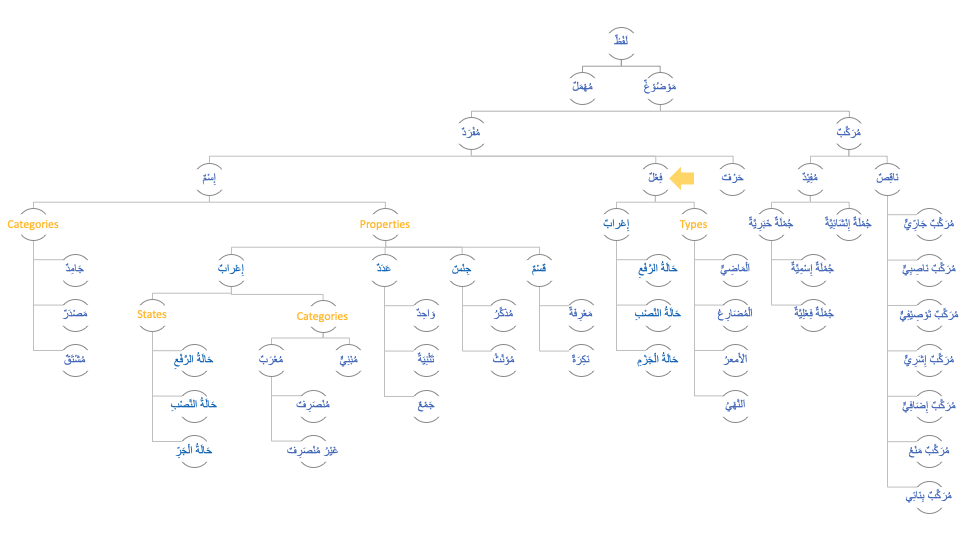
Before we dive into the depth of the فِعْلٌ (verb), we need to understand the concept of an transitive فِعْلٌ and an intransitive فِعْلٌ:
- A transitive فِعْلٌ is called مُتَعَدِّي.
- An intransitive فِعْلٌ is called لَازِم.
مُتَعَدِّي
A transitive فِعْلٌ (مُتَعَدِّي) is a فِعْلٌ that can take a مَفْعُول بِهِ (detail answering who/what the action affected) because the action does not affect the doer, but rather affects another object.
For example أَنْزَلَ means ‘He sent down’. The doer of the action, ‘he’, is not the one who descends, but rather he causes something else to come down. Thus أَنْزَلَ is considered مُتَعَدِّي and it can take a مَفْعُول بِهِ . for example أَنْزَلَ الكِتَبَ means ‘He sent down the book’.
لَازِم
An intransitive فِعْلٌ (لَازِم) is a فِعْلٌ which cannot take a مَفْعُول بِهِ because the action affects the doer himself.
For example نَزَلَ means ‘he came down’. In this case, the action also involves descending, but here the doer of the act is also the one affected by the act, i.e. he is the one who is lowered. Therefore it doesn’t make sense to say نَزَلَ الكِتَابَ because that would translate into ‘He came down the book’.
Easy way to test
An easy way to test if a فِعْلٌ is مُتَعَدِّي or لَازِم, is to ask : can i add ‘someone’ or ‘something’ directly to the end of this فِعْلٌ?
if the answer is yes, then the فِعْلٌ is مُتَعَدِّي, otherwise it is لَازِم. Let’s look at some examples:
قَرَأَ ‘he read’. He read someone. He read something. ‘Something’ can be added therefore transitive فِعْلٌ (مُتَعَدِّي).
سَقَطَ ‘He fell’. He fell someone. He fell something. ‘someone’ or ‘something’ cannot be added, therefore intransitive فِعْلٌ (لَازِم).
سَجَدَ ‘he prostrated’. He prostrated someone. He prostrated something. ‘someone’ or ‘something’ cannot be added, therefore intransitive فِعْلٌ (لَازِم).
Link to Passive verbs (الفِعْلُ الْمَبْنِيُّ لِلْمَجْهُولِ)
Generally, a فِعْلٌ that can be made passive (مَجْهُول) is transitive (مُتَعَدِّي) and one which cannot be made passive (مَجْهُول) is intransitive (لَازِم).
Let us look at some examples.
The following فِعْلٌ are transitive(مُتَعَدِّي):
- taught : He taught (active)→he was taught (can make a passive (مَجْهُول), therefore transitive(مُتَعَدِّي))
- eat: The chicken eats(active) → the chicken is eaten (can make a passive (مَجْهُول), therefore transitive(مُتَعَدِّي))
- watch: we watched (active) → we were watched (can make a passive (مَجْهُول), therefore transitive(مُتَعَدِّي))
The following فِعْلٌ are intransitive(لَازِم):
- cry : Bilal cried (active)→
Bilal was cried(cannot make a passive (مَجْهُول), therefore intransitive (لَازِم)) - sleep: the cat sleeps (active) →
the cat is being slept(cannot make a passive (مَجْهُول), therefore intransitive (لَازِم)) - go: he went (active) →
he was went(cannot make a passive (مَجْهُول), therefore intransitive (لَازِم))

Don’t Assume that the word ‘was’ always leads to a passive meaning. If i say ‘he was standing’, it wouldn’t constitute as a passive statement because the doer (فَاعِلٌ) of the act of standing is known to be ‘He’. However, if i said ‘it was said’, this would qualify as a passive statement because the act of saying is known but the one who said it is not known.