
الْمُضَارِعُ مَبْنِيٌّ لِلْمَجْهُولِ
The اَلْفِعْلُ الْمُضَارِعُ is a present and future tense verb, which in Arabic is used to describe an action happening now or that will happen in the future. This lesson will focus on the present-tense Passive verb i.e the الْمُضَارِعُ الْمَبْنِيُّ لِلْمَجْهُولِ.

We have stated that in Arabic, every active فِعْلٌ (verb) comes with an inside pronoun (ضَمَيْرٌ مُسْتَتِرٌ) which is the doer (فَاعِلٌ).
In a الفِعْلُ الْمَبْنِيُّ لِلْمَعْلُومِ (Active verb), the doer (فَاعِلٌ) of the action is known and stated or understood.
In a الفِعْلُ الْمَبْنِيُّ لِلْمَجْهُولِ (Passive verb), the doer (فَاعِلٌ) of the action is not mentioned, and the action itself is emphasised. A passive فِعْلٌ does not have a doer. But we do know who the action was done-to. Therefore instead of inside pronoun doer, we have an inside pronoun done-to, which is called the نَائِبُالفَاعِلِ.
Examples of inside done-to pronoun (نَائِبُالفَاعِلِ) in اَلْفِعْلُ الْمُضَارِعُ :
يُنْصَرُ
he is helped or he will be helped
The above example has the نَائِبُالفَاعِلِ (done-to) inside the فِعْلٌ (verb), informing us who the action is done-to. The فَاعِلٌ (doer) is not mentioned.
Since we do not know the doer for يُنْصَرُ , we say it is a passive verb (الْمَاضِيُّ الْمَبْنِيُّ لِلْمَجْهُولِ) or we can say مَجْهُول for short.
How the Passive Present-Tense Verb is Made
The following rules are to be applied when converting a present-tense active verb to a present-tense passive verb (الْمُضَارِعُ الْمَبْنِيُّ لِلْمَجْهُولِ → الْمُضَارِعُ الْمَبْنِيُّ لِلْمَعْلُومِ):
- One ــُـ ضَمَّةٌ followed by multiple ــَـ فَتْحَةٌ .
- ــْـ سُكُوْنٌ do not change.
- The last root letter and anything after it does not change.
A way to remember this rule is through the sound pattern:
‘o-aa-same’
This sound pattern indicates single ضَمَّةٌ with ‘o’, followed by multiple فَتْحَةٌ with ‘aa’, سُكُوْنٌ or last root letter and anything after it does not change with ‘same’. Making ‘o-aa-same’.
Worked Example 1: يُنْصَرُ → يَنْصُرُ
Consider the active past-tense verb يَنْصُرُ (he helps).
- The root letters are ن ص ر.
- This is a trilateral verb (i.e. having three root letters)
Step 1:
The first letter يَ carries a ــَـ فَتْحَةٌ.
According to Rule 1, replace this with a يُ → ــُـ ضَمَّةٌ
Step 2:
The first root letter نْ carries a ــْـ سُكُوْنٌ .
According to Rule 2, do not change, therefore → نْ
Step 3:
The second root letter صُ carries a ــُـ ضَمَّةٌ.
Following Rule 1, replace this with a صَ→ ــَـ فَتْحَةٌ
Step 3:
The final root letter رُ remains unchanged, in accordance with Rule 3.
Final Result
يُنْصَرُ → يَنْصُرُ
He helps → He is helped
Worked Example 2: يُخْلَقُوْنَ → يَخْلُقُوْنَ
In Arabic, a فِعْلٌ (verb) is derived from root letters, most commonly three root letters, though some verbs contain more.
Consider the active past-tense verb يَخْلُقُوْنَ (they create).
- The root letters are خ ل ق.
- This is a trilateral verb (i.e. having three root letters), but has additional letters.
Step 1:
The first letter يَ carries a ــَـ فَتْحَةٌ.
According to Rule 1, replace this with a يُ → ــُـ ضَمَّةٌ
Step 2:
The first root letter خْ carries a ــْـ سُكُوْنٌ .
According to Rule 2, do not change, therefore → خْ
Step 3:
The second root letter لُُ carries a ــُـ ضَمَّةٌ.
Following Rule 1, replace this with a لَ→ ــَـ فَتْحَةٌ
Step 3:
The final root letter قُ and everything after it remains unchanged, in accordance with Rule 3.
Final Result
يُخْلَقُوْنَ → يَخْلُقُوْنَ
they create → they are created
Pattern (وَزْن)
The pattern (وَزْن) يُفْعَلُ is formed by taking an active verb يَفْعُلُ and applying the rules to form the present-tense passive verb:
يُفْعَلُ
ف : first root letter
ع : second root letter
ل : third root letter
Bearing in mind every passive فِعْلٌ (verb) comes with an inside done-to pronoun (نَائِبُالفَاعِلِ). The نَائِبُالفَاعِلِ (inside done-to pronoun) is indicated by the combination of prefix and ending. When we change the prefix and ending we change who the action was done-to. The following table shows the endings for each done-to pronoun (ضَمَيْرٌ).
| Pronoun | Prefix | Ending | Pattern (وَزْن) | Translation |
|---|---|---|---|---|
| هُوَ | يُـ | ـُ | يُفْعَلُ | He is done (to) |
| هُمَا | يُـ | ـَانِ | يُفْعَلَانِ | They (two males) are done (to) |
| هُمْ | يُـ | ـُونَ | يُفْعَلُونَ | They (males) are done (to) |
| هِيَ | تُـ | ـُ | تُفْعَلُ | She is done (to) |
| هُمَا | تُـ | ـَانِ | تُفْعَلَانِ | They (two females) are done (to) |
| هُنَّ | يُـ | ـْنَ | يُفْعَلْنَ | They (females) are done (to) |
| أَنْتَ | تُـ | ـُ | تُفْعَلُ | You (male) are done (to) |
| أَنْتُمَا | تُـ | ـَانِ | تُفْعَلَانِ | You (two males) are done (to) |
| أَنْتُمْ | تُـ | ـُونَ | تُفْعَلُونَ | You (males) are done (to) |
| أَنْتِ | تُـ | ـِينَ | تُفْعَلِينَ | You (female) are done (to) |
| أَنْتُمَا | تُـ | ـَانِ | تُفْعَلَانِ | You (two females) are done (to) |
| أَنْتُنَّ | تُـ | ـْنَ | تُفْعَلْنَ | You (females) are done (to) |
| أَنَا | أُ | ـُ | أُفْعَلُ | I am done (to) |
| نَحْنُ | نُـ | ـُ | نُفْعَلُ | We are done (to) |
Example 1 : يُنْصَرُ
Let’s now take the root letters ن ص ر and drop it into the pattern (وَزْن) يُفْعَلُ :
| Pronoun | Prefix | Ending | Pattern | Translation |
|---|---|---|---|---|
| هُوَ | يُـ | ـُ | يُنْصَرُ | He is helped |
| هُمَا (m) | يُـ | ـَانِ | يُنْصَرَانِ | They (two males) are helped |
| هُمْ | يُـ | ـُونَ | يُنْصَرُونَ | They (males) are helped |
| هِيَ | تُـ | ـُ | تُنْصَرُ | She is helped |
| هُمَا (f) | تُـ | ـَانِ | تُنْصَرَانِ | They (two females) are helped |
| هُنَّ | يُـ | ـْنَ | يُنْصَرْنَ | They (females) are helped |
| أَنْتَ | تُـ | ـُ | تُنْصَرُ | You (male) are helped |
| أَنْتُمَا | تُـ | ـَانِ | تُنْصَرَانِ | You (two males) are helped |
| أَنْتُمْ | تُـ | ـُونَ | تُنْصَرُونَ | You (males) are helped |
| أَنْتِ | تُـ | ـِينَ | تُنْصَرِينَ | You (female) are helped |
| أَنْتُمَا | تُـ | ـَانِ | تُنْصَرَانِ | You (two females) are helped |
| أَنْتُنَّ | تُـ | ـْنَ | تُنْصَرْنَ | You (females) are helped |
| أَنَا | أُ | ـُ | أُنْصَرُ | I am helped |
| نَحْنُ | نُـ | ـُ | نُنْصَرُ | We are helped |
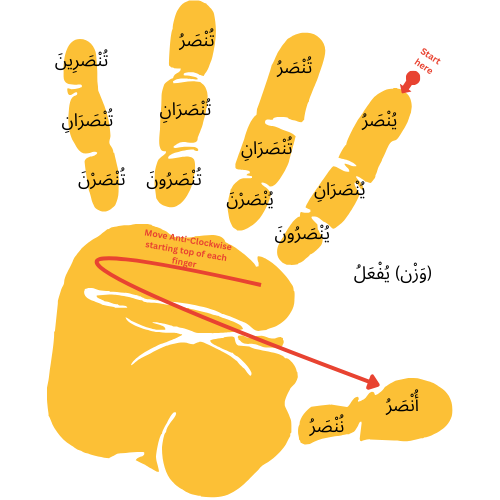
- ن ص ر root letters dropped in the pattern (وَزْن) يُفْعَلُ yields يُنْصَرُ (he is helped).
- The prefix يُ indicates that the done-to pronoun (نَائِبُالفَاعِلِ) is the third person (غَائِبٌ), masculine (مُذَكَّرُ). Therefore, based on the prefix, it can only be one of the following pronouns هُوَ, هُمَا, هُمْ
- The ending ـُ indicates its a singular (وَاحِدٌ) pronoun. Therefore, based on the ending, it can only be one of the following pronouns هُوَ, هِيَ, أَنْتَ, أَنَا, نَحْنُ
- The combination of prefix يُ and ending ـُ indicates that theضَمَيْرٌ مُسْتَتِرٌ (inside pronoun) is هُوَ (‘He’) as in يُنْصَرُ means (He is helped).
So in summary:
1. The four prefix letters are called حُرُوفُ الْمُضَارَعَةِ:
| Prefix | Pronoun |
|---|---|
| يَ or يُ | – ي can indicate a masculine, third person pronoun (i.e هُوَ, هُمَا, هُمْ) – ي can indicate the pronoun هُنَّ |
| تَ or نُ | – ت can indicate a feminine, third person pronoun (i.e هِيَ, هُمَا), the exception is أَنْتِ, which is indicated by a يَ – ت can second person pronouns (i.e. أَنْتَ, أَنْتُمَا, نْتُمْ, أَنْتِ, أَنْتُمَا, أَنْتُنَّ) |
| أَ or أُ | أ indicates the pronoun أَنَا |
| نَ or نُ | ن indicates the pronoun نَحْنُ |
2. The ending tells us number and gender:
| Endings | Plural |
|---|---|
| ـُ | indicates the singular pronouns (i.e. هُوَ, هِيَ, أَنْتَ, أَنَا, نَحْنُ) the exception is أَنْتِ, which is indicated by a ـِينَ |
| ـَانِ | indicates the dual pronouns ( i.e. هُمَا, أَنْتُمَا) |
| ـُونَ | indicates the masculine plural pronouns ( i.e. هُمْ, أَنْتُمْ) |
| ـِينَ | indicates the pronoun أَنْتِ |
| ـْنَ | indicates the feminine plural pronouns (i.e. هُنَّ, أَنْتُنَّ) |
The combination of prefix and ending show the done-to pronoun (نَائِبُالفَاعِلِ).

فِعْلٌ (verb) are said to be تَثْنِيَةٌ (dual) and جَمْعٌ (plural) with respect to their فَاعِلٌ (doer). The action is one. Thus, تَثْنِيَةٌ (duality) and جَمْعٌ (plurality) are signs of an إِسْمٌ not a فِعْلٌ (verb) .
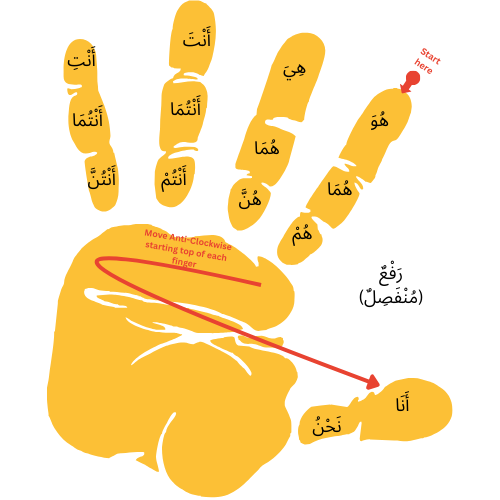
An easy way to remember these, is to conjugate these. Use the same conjugation hand we used for the pronouns. Do you remember the pronoun conjugation hand? See below for a recap:
let us now do this for the root letters ن ص ر for the present-tense Passive verb i.e the الْمُضَارِعُ الْمَبْنِيُّ لِلْمَجْهُولِ, noting the position taken for each conjugation is in the place of its corresponding pronoun.

They say practice makes perfect.
So practice your فِعْلٌ (verb) conjugations regularly.
Example 2 : يُخْلَقُوْنَ
Take the root letters خ ل ق and drop it into the pattern (وَزْن) يُفْعَلُ :
يُخْلَقُوْنَ
they are created
| Pronoun | Prefix | Ending | Pattern | Translation |
|---|---|---|---|---|
| هُوَ | يُـ | ـُ | يُخْلَقُ | He is created |
| هُمَا | يُـ | ـَانِ | يُخْلَقَانِ | They (two males) are created |
| هُمْ | يُـ | ـُونَ | يُخْلَقُونَ | They (males) are created |
| هِيَ | تُـ | ـُ | تُخْلَقُ | She is created |
| هُمَا | تُـ | ـَانِ | تُخْلَقَانِ | They (two females) are created |
| هُنَّ | يُـ | ـْنَ | يُخْلَقْنَ | They (females) are created |
| أَنْتَ | تُـ | ـُ | تُخْلَقُ | You (male) are created |
| أَنْتُمَا | تُـ | ـَانِ | تُخْلَقَانِ | You (two males) are created |
| أَنْتُمْ | تُـ | ـُونَ | تُخْلَقُونَ | You (males) are created |
| أَنْتِ | تُـ | ـِينَ | تُخْلَقِينَ | You (female) are created |
| أَنْتُمَا | تُـ | ـَانِ | تُخْلَقَانِ | You (two females) are created |
| أَنْتُنَّ | تُـ | ـْنَ | تُخْلَقْنَ | You (females) are created |
| أَنَا | أُ | ـُ | أُخْلَقُ | I am created |
| نَحْنُ | نُـ | ـُ | نُخْلَقُ | We are created |
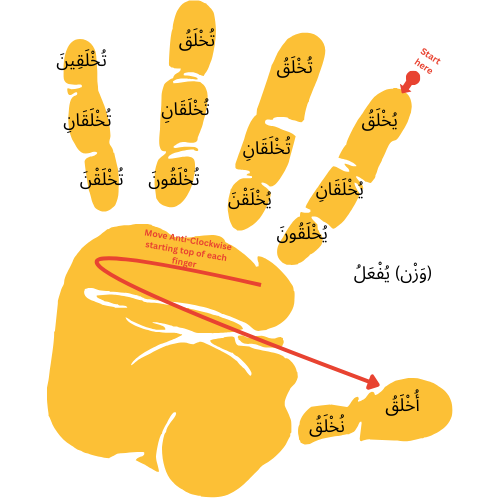
The conjugating hand for the root letters خ ل ق in the present-tense Passive verb i.e the الْمُضَارِعُ الْمَبْنِيُّ لِلْمَجْهُولِ is:
Generally a passive فِعْلٌ starts with ــُـ ضَمَّةٌ.
An active past-tense starts with a ــَـ فَتْحَةٌ.
Therefore a past-tense starting with a ــُـ ضَمَّةٌ must be passive, for example عَلَّمَ is active and عُلِّمَ must be passive because it is past-tense starting with a ــُـ ضَمَّةٌ.
A present-passive starts with a ــُـ ضَمَّةٌ and has multiple ــَـ فَتْحَةٌ. For example يُعْرِضُ is not passive, because it starts with a ــُـ ضَمَّةٌ, but the ــِـ كَسْرَةٌ on the ر means that it is active. The passive form is يُعْرَضُ.
A command اَلْأَمعرُ or اَلنَّهْيُ forbidding فِعْلٌ cannot be passive.