
مَفْعُوْلٌ

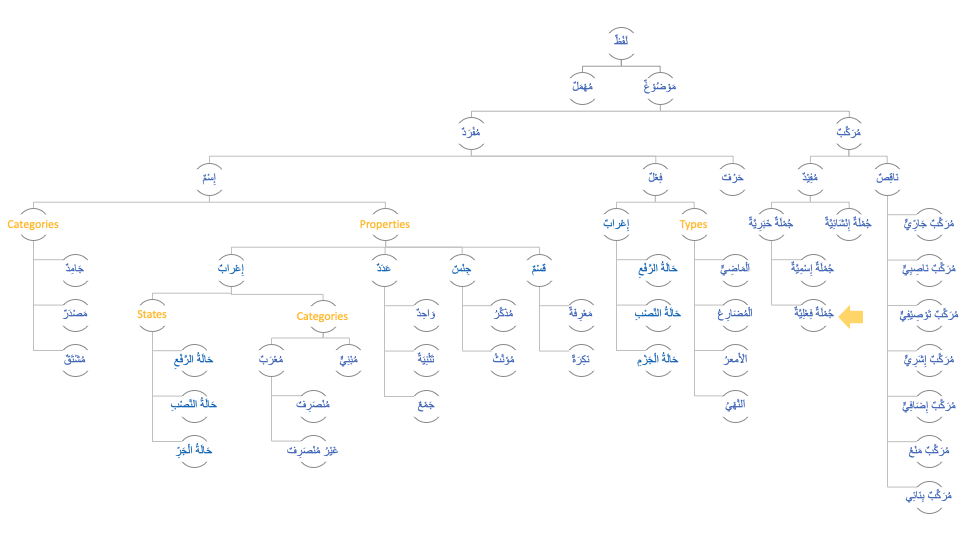
We have learned that مَفْعُوْلٌ is a part of جُمْلَةِ فِعْلِيَّةِ.
مَفْعُوْلٌ (details) provide additional information about the action by answering the questions such as who/what was the action done to, where, why, how, and when.
The مَفْعُوْلٌ (مَفْعُوْلٌ, plural مَفَاعِيْلٌ) are in the نَصْبٌ status.
In Arabic grammar, there are five main types of مَفْعُوْلٌ:
| Explanation | مَفْعُوْلٌ Type |
|---|---|
| who/what was the action done to? | مَفْعُوْلٌ بِهَ |
| when and where did the action take place? | مَفْعُوْلٌ فِيْهِ |
| why was the action carried out? | مَفْعُوْلٌ لَهُ |
| how did the action take place? | مَفْعُوْلٌ حَال |
| how badly (uses a مَصْدَرٌ to emphais/describe the action) | مَفْعُوْلٌ مُطْلَق |

1. جَامِدٌ : It is that إِسْمٌ which is neither derived from another word nor is any word derived from it. For Example: فَرَسٌ horse; بِنْتٌ girl
2. مَصْدَرٌ : It is that إِسْمٌ from which many words are derived. For Example: ضَرْبٌ to hit; نَصْرٌ to help
3. مُشْتَقٌ : It is that إِسْمٌ which is derived from a مَصْدَرٌ. For Example: ضَارِبٌ hitter; مَنْصُوْرٌ the helped
Let us do some examples:
Example 1:
فَوَجَدَا عَبْدًا
And both of them found a servant [18:65]
| Grammatical Analysis | Meaning | |
|---|---|---|
| حَرْفٌ | And | فَ |
| فِعْلٌ ماضٍ | both of them found | وَجَدَا |
| ”a servant’ is a detail of who they found, so it is a مَفْعُوْلٌ بِهَ. | a servant | عَبْدًا |
Example 2:
خَرَقَهَا
He tore it [18:71]
| Grammatical Analysis | Meaning | |
|---|---|---|
| فِعْلٌ ماضٍ | He tore | خَرَقَ |
| The attached pronoun هَا is a detail of what he tore, so it is a مَفْعُوْلٌ بِهَ. | it | هَا |
Example 3:
بَلَغَ مَغْرِبَ الشَّمْسِ
He reached the setting of the sun [18:86]
| Grammatical Analysis | Meaning | |
|---|---|---|
| فِعْلٌ ماضٍ | He reached | بَلَغَ |
| The phrase ‘setting of the sun’, which is an إِضَافَةٌ is a detail of where he reached, so it is a مَفْعُوْلٌ فِيْهِ. Notice that the word مَغْرِبَ is in نَصْبٌ status to indicate it is a detail. | the setting of the sun | مَغْرِبَ الشَّمْسِ |
Example 4:
وَعُرِضُوا عَلَىٰ رَبَّكَ صَفًّا
And they will be presented before your Lord in rows [18:48]
| Grammatical Analysis | Meaning | |
|---|---|---|
| حَرْفٌ | And | وَ |
| فِعْلٌ ماضٍ | they will be presented | عُرِضُوا |
| عَلَىٰ رَبَّ is a جارٌّ وَمَجْرُورٌ phrase رَبَّكَ forms an الإِضَافَة Therefore مُتَعَلِّقٌ بِالفِعْلِ. | before your Lord | عَلَىٰ رَبَّكَ |
| Here ‘in rows’ answers the question, ‘how will they be presented?’ so it is a مَفْعُوْلٌ حَال. | in rows | صَفًّا |
Example 5:
وَكَلَّمَ ٱللَّهُ مُوسَىٰ تَكْلِيمًا
And Allah spoke to Musa directly [4:164]
| Grammatical Analysis | Meaning | |
|---|---|---|
| حَرْفٌ | And | وَ |
| فِعْلٌ ماضٍ with outside doer فَاعِلٌ ‘Allah’ | Allah spoke | كَلَّمَ ٱللَّهُ |
| مَفْعُوْلٌ بِهَ | Musa | مُوسَىٰ |
| Here تَكْلِيمًا is used to show that Allah spoke to Musa directly and literally. It comes from the family كَلَّمَ and so it is a مَفْعُوْلٌ مُطْلَق. | directly | تَكْلِيمًا |