
Purpose of إِعْرابٌ

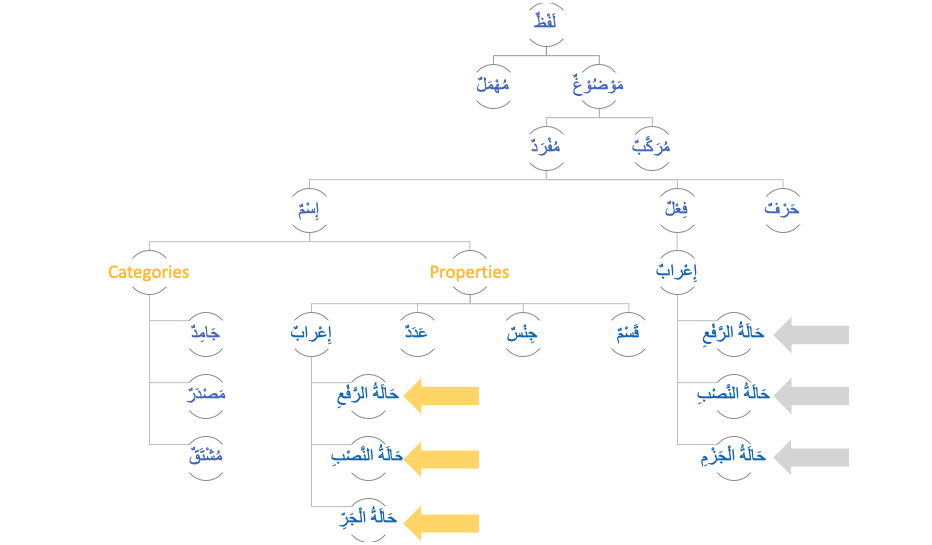

The إِعْرابٌ tells us the role of the إِسْمٌ in a sentence. i.e. what is the إِسْمٌ doing in the sentence. The most common ways it does this is by the use of حَرَكَةٌ or حَرْفُ عِلَّةٍ.
In this lesson we will understand the purpose of the إِعْرابٌ.
In English the role of a word depends on where the word is in the sentence.
For example : ‘Ahmed hit Zayd’
The doer ‘Ahmed’ of the action ‘hit’ comes first, and the detail ‘Zayd’ (i.e. who/what receives the action) is second. If we change the order of the names and say ‘Zayd hit Ahmed’ then now we have changed the roles of Ahmed and Zayd.
In Arabic changing the order of the words does not change the role, rather the إِعْرابٌ at the end of the words tells us the role of the word.
الله
Let us take the word الله in the three sentences below:
اللهُ غَفُوْرٌرَحِيْمٌ
Allah is Oft-Forgiving and Most Merciful
إِنَّ اللهَ غَفُوْرٌرَحِيْمٌ
Indeed Allah is Oft-Forgiving and Most Merciful
أَعُوْذُ بِاللهِ
I seek refuge with Allah
Did you notice that the word Allah in the English text never changed in any of the three sentences. However, in the Arabic text the ending of the word الله changed in all three sentences.
In the sentence اللهُ غَفُورٌ رَحِيمٌ, the word اللهُ is in the state of رَفْعٌ and thus considered مَرْفُوعٌ. This is because, according to the rules of Arabic grammar, the subject is always مَرْفُوعٌ. Since اللهُ has the role of the subject in this sentence, it is مَرْفُوعٌ, and for this reason it takes the sign of رَفْعٌ, which is ضَمَّةٌ (ـُ).
In the sentence إِنَّ اللهَ غَفُورٌ رَحِيمٌ, the word اللهَ is in the state of نَصْبٌ and thus considered مَنْصُوبٌ. This is because, according to the rules of Arabic grammar, the particle إِنَّ causes the subject (اسم إنَّ) to be مَنْصُوبٌ. Since اللهَ has the role of اسم إنَّ in this sentence, it is مَنْصُوبٌ, and for this reason it takes the sign of نَصْبٌ, which is فَتْحَةٌ (ـَ).
In the sentence أَعُوذُ بِاللهِ, the word للهِ is in the state of جَرٍّ and thus considered مَجْرُورٌ. This is because it, according to the rules of Arabic grammar, the preposition بِـ causes the إِسْمٌ that follows it (اسم مَجْرُورٌ) to be in the state of جَرٌّ. Since للهِ has the role of اسم مَجْرُورٌ in this sentence, it is مَجْرُورٌ, and for this reason it takes the sign of جَرٍّ, which is كَسْرَةٌ (ـِ).
مُحَمَّد
Let us take the word مُحَمَّد in the three sentences below:
مُحَمَّدٌ رَسُولُ اللهِ
Muhammad is the Messenger of Allah
أَشْهَدُ أَنَّ مُحَمَّدًا عَبْدُهُ وَرَسُولَهُ
i bear witness that Muhammad is his slave and his messenger
اللَّهُمَّ صَلِّ عَلى مُحَمَّدٍ
O Allah send your blessing on Muhammad
Did you notice that the word Muhammad in the English text never changed in any of the three sentences. However, in the Arabic text the ending of the word مُحَمَّد changed in all three sentences.
In the sentence مُحَمَّدٌ رَسُولُ اللهِ, the word مُحَمَّدٌ is in the state of رَفْعٌ and thus considered مَرْفُوعٌ. This is because, according to the rules of Arabic grammar, the subject is always مَرْفُوعٌ. Since مُحَمَّدٌ has the role of subject of this sentence, it is مَرْفُوعٌ, and for this reason it takes the sign of رَفْعٌ, which is (ـٌ) ضَمَّتَيْنِ.
In the sentence أَشْهَدُ أَنَّ مُحَمَّدًا عَبْدُهُ وَرَسُولَهُ, the word مُحَمَّدًا is in the state of نَصْبٌ and is thus considered مَنْصُوبٌ. This is because, according to the rules of Arabic grammar, the particle أَنَّ causes its إِسْمٌ أَنَّ) إِسْمٌ) be in the state of نَصْب. Since مُحَمَّدًا has the role of إِسْمٌ أَنَّ in this sentence, it is مَنْصُوبٌ, and for this reason it takes the sign of نَصْبٌ, which is (ـً) فَتْحَتَيْنِ.
In the sentence اللَّهُمَّ صَلِّ عَلى مُحَمَّدٍ, the word مُحَمَّدٍ is in the state of جَرٌّ and is thus considered مَجْرُورٌ. This is because, according to the rules of Arabic grammar, the preposition عَلى causes the إِسْمٌ that follows it (اسم مَجْرُورٌ) to be in the state of جَرٌّ. Since مُحَمَّدٍ has the role of اسم مَجْرُورٌ in this sentence, it is مَجْرُورٌ, and for this reason it takes the sign of جَرٌّ, which is (ـٍ) كَسْرَتَيْنِ.
رَجُل
Let us take another word رَجُل.
جَاءَ رَجُلٌ
A man came
رَأَيْتُ رَجُلًا
I saw a man
مَرَرْتُ بِرَجٌلٍ
I passed by a man
Again, the word man never changed in any of the three sentences above in the English Text. However, in the Arabic text the ending of the word رَجُلٌ changed in all three sentences.
In the sentence جَاءَ رَجُلٌ, the word رَجُلٌ is in the state of رَفْعٌ and is thus considered as مَرْفُوعٌ. This is because, according to the rules of Arabic grammar, رَجُلٌ role is as the subject (doer of the action – فاعل) of the verb (فِعْلٌ) جَاءَ. The subject (doer of the action – فاعل) of sentence is always مَرْفُوعٌ. Since رَجُلٌ has the role of the فاعل in this sentence, it is مَرْفُوعٌ, and for this reason it takes the sign of رَفْعٌ, which is the (ـٌ) ضَمَّتَيْنِ..
In the sentence رَأَيْتُ رَجُلًا, the word رَجُلًا is in the state of نَصْبٌ and is thus considered as مَنْصُوبٌ. This is because, according to the rules of Arabic grammar, رَجُلًا role is as the direct object (i.e. who/what receives the action) (مَفْعُولٌ بِهِ) of the verb (فِعْلٌ) رَأَيْتُ. The direct object in a sentence is always مَنْصُوبٌ. Since رَجُلًا has the role of the مفعولٌ به in this sentence, it is مَنْصُوبٌ, and for this reason it takes the sign of نَصْبٌ, which is the (ـً) فَتْحَتَيْنِ.
In the sentence مَرَرْتُ بِرَجُلٍ, the word رَجُلٍ is in the state of جَرٌّ and is thus considered as مَجْرُورٌ. This is because, according to the rules of Arabic grammar, the preposition بِ causes the إِسْمٌ that follows it (اسم مَجْرُورٌ) to be in the state of جَرٌّ. Since رَجُلٍ has the role of اسم مَجْرُورٌ in this sentence, it is مَجْرُورٌ, and for this reason it takes the sign of جَرٌّ, which is (ـٍ) كَسْرَتَيْنِ.
Grammatical Rules
We have briefly touched on a variety of grammatical rules that cause an إِسْمٌ to be in a particular state i.e. رَفْعٌ or نَصْبٌ or جَرٌّ. Do not worry if you don’t totally comprehend these rules, as these will be introduced formally in future lessons. Key take-aways here is to understand that the states (i.e.رَفْعٌ or نَصْبٌ or جَرٌّ.) represent the role a word plays in a sentence.
Summary
Arabic shows roles through إِعْرابٌ. English mostly shows it through word order.
So Arabic says:
“I will show you the role through the إِعْرابٌ.”
English says:
“I will show you the role through position.”