اَلْفِعْلُ الْمَاضِيُّ with Attached Pronoun
This lesson discusses the اَلْفِعْلُ الْمَاضِيُّ مَعَ الضَّمَائِرِ الْمُتَّصِلَةِ i.e. the past-tense verb with an attached pronoun.

There are two types of ضَمَائِرٌ:
- الضَّمِيْرُ الْبَارِزُ : Visible Pronouns
- الضَّمِيْرُ الْمُسْتَتِرُ : Hidden Pronouns
The الضَّمِيْرُ الْبَارِزُ (Visible Pronouns) is that ضَمِيْرٌ which has a distinct form. It can appear on its own (unattached) or it can be attached to another word.i.e.:
- ضَمِيْرٌ مُنْفَصِلٌ (Unattached pronoun).This is always in the رَفْعٌ state.
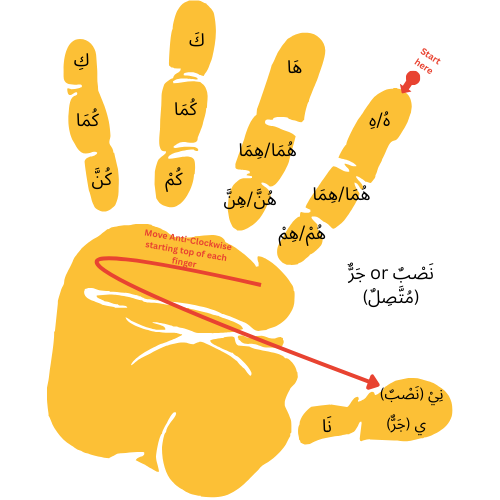
- ضَمِيْرٌ مُتَّصِلٌ (Attached pronoun). This either in نَصْبٌ or جَرٌّ states, depending on what they are attached to:
- ضَمِيْرٌ مُتَّصِلٌ is نَصْبٌ in two cases:
- Attached to a حَرْفٌ نَصْبٌ
- Attached to a فِعْلٌ
- ضَمِيْرٌ مُتَّصِلٌ is جَرٌّ in two cases:
- Attached to an إِسْمٌ (when مُضَافٌ إِلَيْهِ)
- Attached to حَرْفٌ جَرٌّ
- ضَمِيْرٌ مُتَّصِلٌ is نَصْبٌ in two cases:
So, when a pronoun is attached to a فِعْلٌ it is always in the نَصْبٌ state, because it is the detail of the فِعْلٌ. The attached pronoun as stated above is called the ضَمِيْرٌ مُتَّصِلٌ.
Let us look at a step-by-step example to help us understand how to translate a فِعْلٌ with a ضَمِيْرٌ مُتَّصِلٌ attached pronoun.
Example: نَصَرَنِي
- Identify and ignore the attached pronoun : نِي is the attached pronoun.
- Translate the فِعْلٌ by itself: نَصَرَ means ‘he helped’
- Translate the attached pronounoun by itself: نِي means ‘me’.
- Put it all together: نَصَرَنِي ‘He helped me’.
Below is a reminder of all the ضَمِيْرٌ مُتَّصِلٌ (attached pronouns):